Leaders of the American Recovery Association are looking to provide members with another vital information update before the year closes.
ARA’s Dave Kennedy, Les McCook and Patrick Altes will be hosting an open industry webinar on Thursday to give their perspectives on the current industry landscape as well as an update on the association’s legislative efforts.
The webinar is scheduled to begin at 2 p.m. (ET) on Thursday. Registration for the event can be completed here.
“This webinar is your opportunity to use ARA as a resource for the industry as you navigate challenges within your business,” ARA said.
ARA also is set to release its latest Industry whitepaper focused on specialty equipment, including flatbeds, dollies, lowboys and more.
“The days of a simple recovery are over,” ARA said. “And with new special equipment needed to safely recover collateral, it’s important you know the correct fees for specialty equipment.”
End of Tenancy Cleaning — a service provider based in the United Kingdom — recently surveyed 3,230 people from across the globe, asking them, “What are some of the grossest things you have had in your car that you may have forgotten about?”
The results revealed some notable findings that might be quite familiar to repossession agents and their staffs, reinforcing the potential danger representatives encounter when securing personal property.
Topping the list of what owners say they leave in their vehicles are old tissues at 39.1%. The other items listed in the survey results might be considered significantly more gruesome. The rundown includes:
1. Old tissues: 39.1%
2. Old take-away food: 38.6%
3. Urine bottles: 32.2%
4. Receipts: 29.5%
5. Chocolate wrappers: 27.4%
6. Money: 26.1%
7. Old groceries: 25.8%
8. Broken car parts: 23.3%
9. Make-up: 20.7%
10. Used diapers: 18.3%
11. Chewed chewing gum: 12.8%
12. Used condoms: 10.3%
13. Hair (removed from hairbrush): 9.7%
14. Unwashed gym clothes: 8.9%
15. Used towels: 8.7%
16. Used sanitary equipment: 7.9%
17. Magazines: 6.8%
18. Sex toys: 1.8%
The company also asked survey participants how often they clean their vehicle. The frequency breakdown is as follows:
Once a week: 4.0%
Once every two weeks: 6.5%
Once every two/three months: 24.7%
Once every 6 months: 41.7%
Once a year: 7.9%
Every other year: 3.5%
Never: 11.7%
The American Recovery Association (ARA) recently distributed a message to the industry, reiterating its positions regarding personal property in repossessed vehicles. The move was triggered by the $5 million settlement Nissan’s captive finance company reached with the Consumer Financial Protection Bureau after the regulator said it found several violations by Nissan Motor Acceptance Corp. in connection with vehicle repossessions.
ARA focused its attention on one specific piece of the consent order, which states:
“The practice of withholding consumers’ personal property unless consumers paid an upfront fee to recover it caused or was likely to cause substantial injury that is not reasonably avoidable or outweighed by the countervailing benefits to consumers or competition.”
The association insisted that many states have recognized that a fee associated with handling personal property is a legitimate expense and a reasonable fee can be charged to the consumer.
That assertion led ARA to reiterate three points it also highlighted in a white paper compiled in August. The ARA said:
1. Nothing in this order changes what a collateral recovery agency is permitted to charge. The latest ARA White Paper on personal property demonstrates the validity for this fee and establishes the handling of personal property as a separate and distinct service not included in a repossession fee.
2. It states lenders must prohibit their repossessors from charging personal property fees directly to consumers and demanding fees as a condition of returning personal property. Nothing in the consent order prohibits the repossessor from collecting those fees by way of contractual agreement directly with the lender.
3. The CFPB, in several points in their Supervisory Highlights Oct 2016, suggest that the fees associated with personal property handling can be billed to the creditor.
“The legitimacy and permissibility of this fee has been established for 30 years,” ARA added in its latest message. “The handling of personal property is very time consuming. Occasionally, it is also unsafe.”
ARA recommended that finance companies collaborate with the legal counsel on how to proceed with this portion of the repossession process.
RISC chief executive officer Stamatis Ferarolis appeared on the Auto Remarketing Podcast not only to share his observations about the repossession and recovery industry, but also to describe a new project to help a demographic impacted significantly by the pandemic.
The company has organized what it’s calling Program LIFT, which is designed to encourage and support teens with professional work experience and more.
To listen to the entire conversation, click on the link available below, or visit the Auto Remarketing Podcast page.
Download and subscribe to the Auto Remarketing Podcast on iTunes or on Google Play.
For most consumers, they have a variety of options and carriers when it comes to insurance. For repossession agents, availability and choices aren’t so robust, because of the complexity of the business, among other factors.
However, the landscape appears to be improving, as Renee Low from the Harding Brooks Insurance Agency explains during this episode of the Auto Remarketing Podcast.
To listen to the entire conversation, click on the link available below, or visit the Auto Remarketing Podcast page.
Download and subscribe to the Auto Remarketing Podcast on iTunes or on Google Play.
The Consumer Financial Protection Bureau issued a consent order in the auto-finance industry for the second time in less than a month; this time with Nissan’s captive.
According to a news release distributed on Tuesday, the bureau said it found several violations by Nissan Motor Acceptance Corp. (NMAC) in connection with vehicle repossessions, including:
— Wrongfully repossessed vehicles
— Kept personal property in consumers’ repossessed vehicles until consumers paid a storage fee
— Deprived consumers paying by phone of the ability to select payment options with significantly lower fees
— In its contract extension agreements, made a deceptive statement that appeared to limit consumers’ bankruptcy protections.
Officials said these actions violated the Consumer Financial Protection Act’s (CFPA) prohibition against unfair and deceptive acts and practices.
The CFPB explained the consent order requires NMAC to provide up to $1 million of cash redress to consumers subject to a wrongful repossession, credit any outstanding account charges associated with a wrongful repossession, and to pay a civil money penalty of $4 million.
The order also imposes certain requirements to prevent future violations and remediate consumers whose vehicles are wrongfully repossessed going forward.
When contacted by SubPrime Auto Finance News, NMAC offered this statement about the matter:
“Nissan Motor Acceptance Corporation (NMAC) has reached a voluntary agreement with the Consumer Financial Protection Bureau (CFPB) regarding claims of unfair and deceptive practices. NMAC denies any wrongdoing but has agreed to settle with the CFPB in the best interest for all parties. While NMAC disagrees with the CFPB’s claims, we take their assertions seriously and share their commitment to fair practices for all our customers. The actions NMAC will voluntarily take under this agreement are intended to further that commitment and to provide appropriate relief for affected customers.”
The bureau went into more detail about its findings that led to this consent order that arrived on the heels of an agreement with Lobel Financial. The order also is the largest since the CFPB’s consent order totaling nearly $12 million with Santander Consumer USA in November 2018.
The CFPB said it specifically found that from 2013 through September of 2019, NMAC repossessed hundreds of consumers’ vehicles despite the consumer having made payments or otherwise taken actions that should have prevented the repossession.
The bureau said it also found that from at least early 2014 through late August 2017, NMAC’s repossession agents with the captive’s knowledge, demanded that consumers pay a separate, upfront storage fee for personal property contained in repossessed vehicles. These agents refused to return consumers’ personal property until the consumers paid the fee, according to the regulator.
The CFPB went on to say that it further discovered that from 2012 through part of 2017, Nissan deprived consumers paying by phone of the ability to select pay-by-phone options with significantly lower fees. Officials said numerous consumers paid $7.95 more to make a phone payment than they would have if they had known of and selected a different payment option.
The bureau also found that when NMAC agreed to modify a consumer’s installment payments for tens of thousands of accounts that NMAC used agreements or written confirmations that included language that created the net misimpression that consumers could not file for bankruptcy.
The CPFB indicated that the consent order requires NMAC to refund fees paid by consumers, credit any outstanding charges stemming from the repossession, and pay consumers redress for each day the captive wrongfully held the vehicle.
NMAC an must also pay a civil money penalty of $4 million.
The consent order also requires NMAC to:
— Prohibit its repossession agents from charging personal property fees to consumers directly and from demanding fees as a condition of returning personal property
— Correct its repossession practices and conduct a quarterly review to discover and remediate any future wrongful repossessions
— Clearly disclose to consumers the fee for each method of making a payment by phone before consumers are asked which method they wish to use
— Stop using any language that creates the impression that consumers have surrendered their bankruptcy rights
The entire consent order can be found on this website.
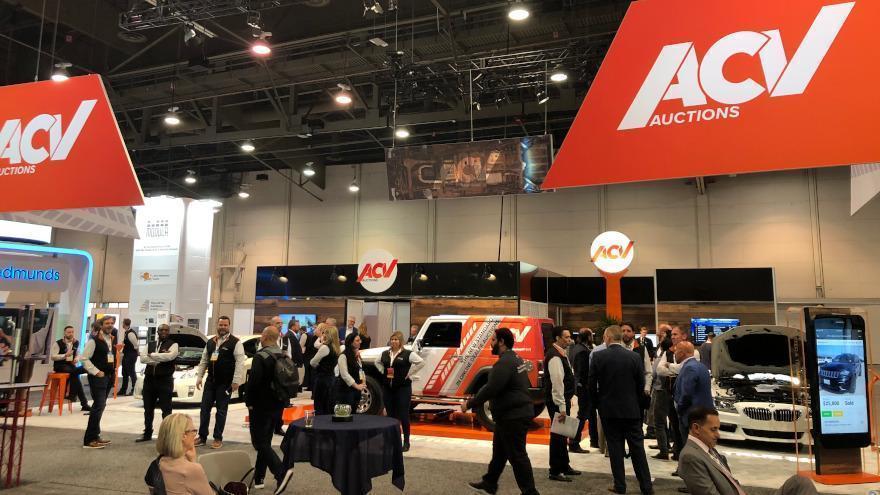
The American Recovery Association is looking to smooth one of the most challenging parts of the recovery process through what the organization is calling a “ground-breaking” partnership with ACV Auctions.
With access to ACV’s inspection services and active marketplace, ARA said on Wednesday that its members now can leverage ACV to seamlessly inspect, list and sell vehicles same-day directly from ARA member storage facilities.
To recap, ACV is an online wholesale automotive marketplace driven by technology to provide transparency and national scale through third-party, accurate vehicle condition reports and 20-minute auctions.
With this newest partnership, ARA members will now have access to a new remarketing strategy that can allow for additional revenue streams and access to an active national buyer pool through ACV’s online auction platform.
“We are glad to promote a company that recognizes the value of our facilities and the true meaning of engaged customer service,” ARA president Dave Kennedy said in a news release. “I am positive that this relationship will be a valuable one for the ARA membership, and for the lenders that utilize the ACV Online Auction platform.”
As part of this new partnership, ARA will be able to facilitate a new remarketing strategy for finance companies, utilizing ARA member’s professional locations as marshaling centers for repossessed collateral.
With access to a large database of vehicle history and condition information, ACV’s inspection force, once dispatched to an ARA member storage facility, can produce a comprehensive True360 condition report to assess the “true” value of each vehicle before its listed for sale on ACV’s live, 20-minute auction platform.
ARA said this process can give members an immediate return for every vehicle that is sold through this platform from their storage facilities.
“We look forward to offering ARA members an efficient remarketing opportunity that will enhance their core business offerings. ACV’s online auction experience puts the customer in the driver’s seat, saving them time and money,” ACV chief sales officer Mike Waterman said.
“Given ARA’s wide member base and professionalism in the auto-recovery industry, this partnership was a natural fit,” Waterman continued.
For more information about ARA, its partnerships and its member benefits, visit repo.org. For more information on ACV Auctions, visit acvauctions.com.
RISC announced that with support from Hudson Cook, it recently completed the 2020 update of the education firm’s training certification program — CARS Financial Client (CARS FC).
The firm reiterated this week that the CARS FC certification program was created for financial clients, including national forwarding companies and lending institutions, to provide a comprehensive understanding of the state and federal laws that apply to self-help repossession.
RISC indicated in a news release that the course update aligns the content with current federal law and the addition of the Equal Credit Opportunity Act (ECOA).
RISC developed this certification curriculum in 2017 to support industry professionals who do not perform repossessions and is updated annually.
This online training program takes enrollees through all aspects of the repossession process, from government regulations to possible liability traps, and teaches best practices. The program covers topics such as:
• Consumer Financial Protection Bureau oversight
• Fair Debt Collections Practices Act (FDCPA)
• Dodd-Frank prohibition on Unfair, Deceptive, and Abusive Acts and Practices (UDAAP)
• Telephone Protection Act
• Servicemembers Civil Relief Act
• Contracts
• Crimes and torts
RISC noted that CARS FC is an online course administered on its educational platform that can allows for self-paced training.
The firm pointed out more than 5,000 people are certified annually with RISC's CARS FC, CARS, and CARS Continuing Education programs.
To learn how to train yourself or your employees, contact RISC at [email protected].
Consolidation that the repossession and recovery industries have rarely seen — if ever — came to light on Tuesday.
According to a news release, Camping Companies and Paramount Recovery Service are merging, and four other repossession companies are involved, too, as Accurate Adjustments of California, Able Auto Adjusters of California, Advanced Services of Redding California and Tri-State Recovery of Arizona are melding into a new company in move officials said will be completed by the end year.
Starting Jan. 1, the combined company will be known as ART Asset Adjusters, which plans to offer direct one-call asset recovery services throughout California, Arizona, Nevada, Utah, Colorado and New Mexico operating from approximately 40 marshalling facilities across that service footprint.
The news release indicated the owners of the merging companies will continue in full time roles with ART Asset Adjusters providing leadership and operational continuity for all auto-finance clients.
“Each of the six companies that are joining together have a well-established track record in their respective markets for strong operational performance and for maintaining quality relationships with their lender clients,” said Kevin Camping of Camping Companies, who will serve as president of ART Asset Adjusters.
“Combining the talent and experience of all the industry leaders within our six companies will allow us to more effectively know and serve our lender clients going forward, while also becoming a dynamic place for professionals in our industry to build a successful and long-term career,” Camping continued.
Steve Simons of Paramount Recovery Service will serve as senior vice president and chief strategy officer of ART Asset Adjusters.
“In addition to our great people, the combined resources of these six companies will allow us to more effectively and efficiently deliver quality results in the field for our clients on a daily basis,” Simons said. “Paramount has been a leader in the deployment of LPR and other technologies that continuously improve operational performance and timely response.
“Coming together as one larger company will greatly increase our collective ability to be aggressive adopters of new technology and lead the industry in delivering asset recovery services that increase the financial success of our lender clients,” he added.
Doug Camping of Camping Companies will be chief financial officer of ART Asset Adjusters.
“The combined scope of our people, resources and service footprint will give each of the clients we proudly work for increased confidence that they can count on our company as trusted partners,” Doug Camping said. “Our ownership team is resolutely committed to our company setting the standard in the repossession industry for being fully compliant, financially strong, managing risk well and always investing in our future.
“This will allow us to continue serving our clients for a long time to come,” Doug Camping went on to say.
And Dan Johnson, who will serve as chief executive officer of ART Asset Adjusters, added this perspective.
“With a passion for leading the charge in our organization to empower our employees towards personal growth and professional success, I share the collective excitement of our leadership team about this merger and our future together,” Johnson said. “As an ownership group, we have two foundational and guiding motivations in coming together as one company: to provide a stronger and brighter future for the hard-working and loyal people that presently work for each of our companies, and to continuously improve our ability to be the most trusted lender services partner in asset recovery for each of our lender clients.
“We will accomplish these two goals together as one team – ART Asset Adjusters, LLC,” Johnson concluded.
For more information, visit www.artassetadjusters.com.
The American Recovery recently rolled out its latest informational initiative since the coronavirus pandemic began.
The newest project is a new whitepaper series titled, “Repossession Matters,” as ARA said it will be addressing issues and presenting revenue models to allow for repossession agencies to operate in a viable and sustainable manner.
“In light of the ongoing struggles in our industry, now magnified by the pressure of COVID-19, ARA has been assessing, researching and creating content in order to put forth a clear argument for radical change within the pricing structures of our industry. These changes are long overdue and will ultimately benefit all parties throughout the industry,” ARA said.
“For many years now, we have been bankrupting ourselves thanks to the inability of repossession agents, lenders and forwarders to come together and address issues head-on,” the association continued.
“The goal of the Repossession Matters series will be to raise understanding among us and lead with one clear voice as an industry — something that up until this point has not been achieved,” ARA went to say.
The opening segment focuses on what the association described as the “true” cost and potential risk surrounding personal property fees.
“Every day, members of our industry put themselves at risk handling potentially hazardous materials from recovered vehicles and dealing with personal property from repossessed vehicles is one of the most difficult aspects of the recovery professional service, making it even more important to charge the correct fees for handling belongings,” ARA said.
“At ARA, we are confident that by combatting challenges with the entire industry in mind, we can bring about mutually beneficial industry changes and unify our voice as one,” the association added.
The opening series segment can be found on this website.