Crediverso is looking to use its recently launched online presence to give Hispanic consumers information and options to make wise credit decisions.
To bridge a cultural gap where U.S. banking institutions might have fallen short, Crediverso highlighted that its mobile responsive site is addressing the needs of Spanish-speaking communities with content specifically designed for the Latino community.
“Although U.S. Latinos spend billions of dollars on financial products every year, financial institutions and service providers are not effectively marketing to this segment of the population, and they remain dramatically underbanked as compared to the general market,” Crediverso founder and chief executive officer Carlos Hernandez said in a news release.
“There are 61 million Latinos in the U.S. and most banking establishments fail to provide fully bilingual sites and lack understanding about the distinction between different Spanish-speaking ethnic groups. Furthermore, many of the largest companies in the country spend less than 1% of their marketing budget on reaching Latinos. These practices lead to poor access and information. Our goal is to change that,” Hernandez continued.
Crediverso is aiming to provide consumer access to free, relevant, unbiased content, including comparison tools, credit resources and vital information for making smarter and more informed personal finance decisions.
Crediverso said it can save time and effort for users since it has developed a proprietary system that provides more personalized recommendations based on user interests and spending habits.
Crediverso also mentioned it has employed a team of finance experts who have written reviews, guides and helpful educational information on how to successfully manage credit cards and other financial topics.
For more information about Crediverso, visit www.Crediverso.com.
With credit unions collectively having an immense piece of the auto finance market, institutions are looking to retain that share and even gather a bit more by leveraging technology.
CU Direct chief revenue officer Phil DuPree joined Nick for this episode recorded during NADA Show 2019 where they discussed how credit unions and dealerships are working together.
The full episode can be found below.
Download and subscribe to the Auto Remarketing Podcast on iTunes or on Google Play.
You can also listen to the latest episode in the window below.
Catch the latest episodes on the Auto Remarketing Podcast homepage and on our Soundcloud page.
Please complete our audience survey; we appreciate your feedback.
A trio of companies are joining forces to revamp the credit score.
Experian, FICO and Finicity announced a new credit score this week during the Money 20/20 USA conference. The new score, called UltraFICO Score, leverages account aggregation technology and distribution capability from Experian and Finicity to help consumers improve access to credit by tapping into consumer-contributed data, such as checking, savings and money market account data, that reflects responsible financial management activity.
With UltraFICO Score, the companies explained that a consumer grants permission to contribute information from banking statements, including the length of time accounts have been open, frequency of activity and evidence of saving, which can be electronically read by Finicity and combined with consumer credit information from Experian to provide an enhanced view of positive financial behavior.
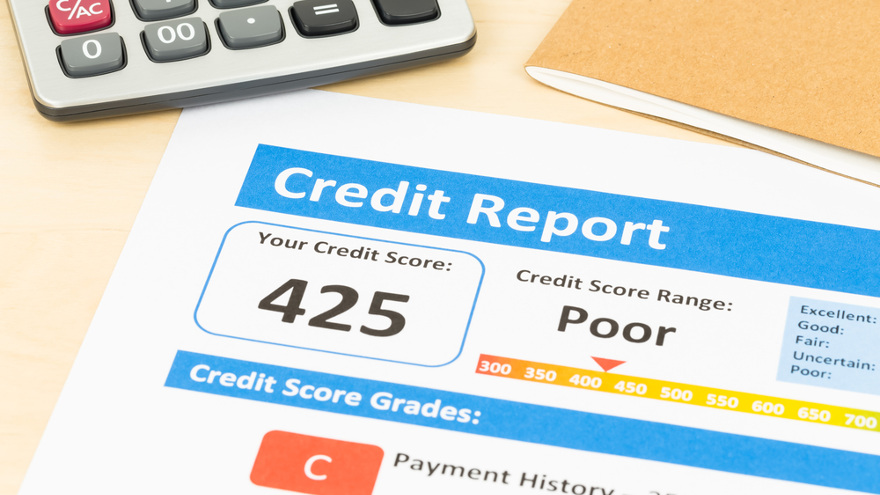
Experian, FICO and Finicity estimate this new score has the potential to improve credit access for the majority of Americans and is particularly relevant for those who fall in the grey area in terms of credit scores (scores in the upper 500s to lower 600s) or fall just below a finance company’s cut-off score.
Consumers who are relatively new to credit with limited history or those with previous financial distress that are getting back on their feet stand to benefit the most, according to the companies.
“This changes the whole dynamic of the lender and customer relationship,” said Jim Wehmann, executive vice president of scores at FICO. “It empowers consumers to have greater control over the information that is being used in making credit risk decisions. It also enables a deeper dialogue between the consumer and lenders to help both parties make better financial decisions.
“It’s a game changer,” Wehmann added.
The companies indicated the UltraFICO Score will launch as a pilot program in early 2019. The pilot is designed to validate the score and assess willingness of consumers to share financial data for a potentially higher score.
The company noted pilot participants were sourced across various lines of businesses.
The model developed by FICO will be implemented through Experian and integrated into a finance company’s existing operational workflow. Borrower data will be aggregated through Finicity.
Officials pointed out the UltraFICO Score builds off of the framework of the base FICO Score, and is designed to reflect the same odds-to-score relationship so that the new score can be easily incorporated into lending strategies and origination account management systems.
The UltraFICO Score is slated to be broadly available to finance companies during the middle of next year.
“As the consumer’s bureau, our goal is to help empower consumers and to give better access to credit for more consumers, all while promoting fair lending,” said Alex Lintner, president of consumer information services at Experian.
“Through this project, we’ve found a new way to use consumer-permissioned data that allows lenders to make better decisions and helps consumers gain access to credit,” Linter continued.
Finicity chief executive officer Steve Smith went on to say, “This approach allows Americans to benefit from positive financial behaviors We are proud to have created a new way for consumers to share financial information, safely and securely so that a new UltraFICO Score can be created.”
To learn more, visit www.fico.com/en/products/ultrafico-score or www.fico.com/ultrafico.
Since oftentimes potential buyers are cruising website and making considerations based on their monthly budget, truPayments recently introduced tru Shop-by-Payment and the ShopByPayment.com website.
Company officials explained that tru Shop-by-Payment is a Software-as-a-Service product for dealers and finance companies aimed at turning the buying process upside down by leveraging new technology.
The company explained that tru Shop-by-Payment can provide a one-to-one personalized shopping experience, allowing consumers to shop simultaneously for their vehicle and financing across all a dealer’s inventory and finance programs, for all available terms, with rebates, incentives, specials, ePrice, trade-in equity, etc., calculated and applied.
This experience is powered by the patent-pending truPayments engine and the company’s new Grail Adaptive Digital Retailing platform.
Tarry Shebesta, chief executive officer of truPayments, indicated that the customized shopping experience begins not with selecting a vehicle, but with personalization. Shebesta noted each customer journey is uniquely built around the customer’s preferences, financial profile and the context of their activities.
For the majority of consumers, Shebesta insisted that monthly payment is the No. 1 factor when buying a vehicle, but it’s the last thing buyers learn. Similar to offline processes, he acknowledged most digital retailing solutions begin when a customer selects a vehicle to purchase, after which they can figure out what their payment options might be.
By starting with credit, Shebesta pointed out that customers can see only vehicles and financing options for which they actually qualify.
“Presenting customers with inaccurate payments results in frustration, embarrassment and lost sales,” Shebesta said. “Comparison shopping for cars based on real credit and monthly budget creates an empowering customer experience.”
Shebesta mentioned credit information is obtained using a “soft pull,” which does not impact on the customer’s credit. He added the process is completely private and does not require sensitive personal information, such as Social Security Number or date of birth.
“Wow! Is how customers feel when they experience tru Shop-by-Payment,” Shebesta said. “They discover vehicles they didn’t know they could afford or a payment they didn’t know they could get.”
Parent company, Automobile Consumer Services, introduced Shop-by-Payment functionality in its DriveItNow product in 2013. And now, tru Shop-by-Payment “takes personalized payment shopping to the next level,” according to the company.
Dealers and finance companies can learn more at ShopByPayment.com.
Criminals are becoming more creative in their approach to commit synthetic ID fraud, and new technology recently detected a ploy by an individual who tried a scheme at two different Michigan dealerships.
According to the Federal Trade Commission, 1.7 percent of identity fraud complaints indicated that an auto-finance contract had been generated fraudulently, up from 0.8 percent in 2015.
To curtail this trend, Equifax is working with Oplogic, a company that manages and processes customer information with a simple ID scan, to help reduce unwanted threats stemming from synthetic ID fraud.
The Synthetic ID fraud occurs when a criminal combines real (usually stolen) and fake information to create a new identity. The two companies’ solutions recently helped stop an auto crime at a Michigan dealership.
Driver’s Synthetic Identity Verification from Oplogic, powered with Equifax identity validation tools, is helping dealers reduce unwanted threats. In the attempted fraud scam, a woman visited a dealership with the intent to purchase a vehicle. When she presented her Texas driver’s license, the dealership concluded that the license was synthetic after running a license scan in the patented Oplogic Deal Operator CRM system.
When the same person made a similar attempt shortly thereafter at a different dealership that uses Oplogic Deal Operator CRM, authorities made an arrest.
“The Oplogic Deal Operator CRM combined with Equifax fraud detection and identity validation tools is helping dealerships stop criminals in their showrooms before the crime occurs,” Oplogic president John Parent said. “This adds a much-needed level of protection for dealers and lenders.”
Using this system, dealers can identify fraudulent credentials early in the sales process and before the test drive occurs. The process involves the dealership scanning the potential buyer’s driver’s license using Oplogic CRM software. During the scan, the license is verified against Equifax data and fraud tools to confirm identity.
“Fraudulent activity has become more complex over the years, and it continues to cost billions in lost revenue for dealers and lenders,” said Ken Allen, senior vice president of identity and fraud at Equifax.
“Our data analytics platforms have also become much more sophisticated, and in partnering with leading solution providers such as Oplogic we are making great strides in reducing the number of fraudsters who attempt to create synthetic identities inside the showroom,” Allen went on to say.
Equifax has expanded its set of offerings that help mitigate synthetic ID fraud with the addition of FraudIQ Synthetic ID Alerts — which are based on patent-pending algorithms that analyze attributes such as authorized user velocity and identity discrepancies to help determine if the identity presented could be synthetic.