As CarProof continues its province-to-province campaign to disclose the lesser-known details of used-vehicles sold in Canada, some disturbing statistics come out of Alberta.
According to the company, nearly half of all used-car transactions in Alberta occur without proper disclosures. On top of that, roughly 20 percent of used vehicles listed online for sale in Alberta have an unfixed safety recall.
To put those numbers in perspective, CarProof says the number of vehicles on the road in Alberta operating with an unfixed manufacturer-initiated safety recall is close to half a million. Looking at vehicles sold, the company says that approximately 200,000 used vehicles sold annually by Albertans are sold without proper disclosure of the vehicle’s accident history.
“The number of unsafe vehicles on the roads and listed for sale in Alberta is alarming,” said Ed Woiteshek, president and chief executive officer at CarProof. “It’s a public safety issue and, as Canada’s gold standard in used car information, we are in a unique position to help do something about it.
“It’s clear the current system to notify consumers of recalls is broken,” he continued. “We hope giving away free CARPROOF reports will help be part of the solution to make our roads safer.”
These results follow the company’s announcement last month for Manitoba, which found that one in 10 vehicles registered in the province had open safety recalls.
In a recent correspondence with Auto Remarketing Canada, John Bachinski, the executive director of the Alberta Motor Vehicle Industry Council, laid out the guidelines provided to dealers in his province.
“In Alberta we require shoppers to be presented with a current and complete mechanical fitness assessment prior to buying or leasing a used vehicle,” Bachinski said. “We recommend potential buyers get used vehicles independently inspected and research the vehicle history before entering in to a purchase contract. The buyer may also want to check with the manufacturer to see if there are any outstanding warranty repairs.”
For more information on AMVIC and its regulations, visit its site here.
OMVIC announced today the beginning of its four-week campaign to spread awareness of all-in price advertising for car buyers in Ontario.
Terry O’Keefe, OMVIC’s director of communications and education, says there is a surprisingly low amount of awareness of the policy in the region.
“Only 29 percent of Ontarians know that if they see a dealer’s advertised price for a vehicle, that price must include all fees and charges the dealer intends to collect,” O’Keefe said. “This campaign is designed to further educate and inform, because better-educated consumers are better-protected consumers.”
As illustrated in the above video advertisement, OMVIC’s campaign message is “all-in pricing – it’s putting the fun and excitement back into buying a car … and, it’s the law!” OMVIC’s campaign includes online, radio and TV advertising across the entire province of Ontario, including all major television networks such as CBC, CityTV, CTV and Global.
O’Keefe, long an advocate for the policy, continues to explain the Ontarian policy as simply as possible.
“There should be no additional hidden fees or added surprise costs, with the exception of HST and licensing,” O’Keefe said.
For a complete explanation on Ontario’s all-in pricing protection legislation, check out OMVIC’s site here.
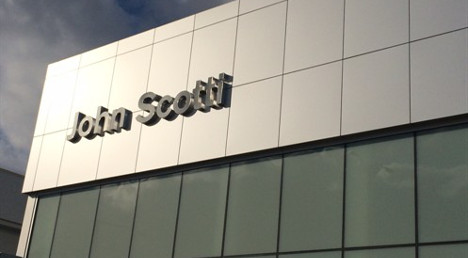
Montreal’s John Scotti Volvo is the first dealership in North America to unveil the all-new Volvo Retail Experience.
The “Experience” is a revamped retail design concept, which aims at enhancing the customer experience while also focusing on design quality and contemporary aesthetics.
“The Volvo Retail Experience concept is a positive signal of Volvo’s commitment to Canada as well as the brand’s bright future in the automotive landscape,” said president and chief executive officer Marc Engelen. “John Scotti Volvo is the first retailer in North America to showcase the Volvo Retail Experience concept demonstrating their continued dedication to the re-invigoration of the Volvo brand.”
The company says the new look is designed to provide a “welcoming, accessible retailer for Volvo customers offering a warm accessibility that signals another positive illustration of the future of Volvo in Canada.”
The Volvo Retail Experience Concept was designed to be universally applied, and management made an effort to create changes that would be adaptable to the whole retail network of Canada.
The concept focuses on contrasts for both the exterior and interior of the stores, and the design, furniture and lighting complement Volvo’s professed loyalty to its Scandinavian heritage.
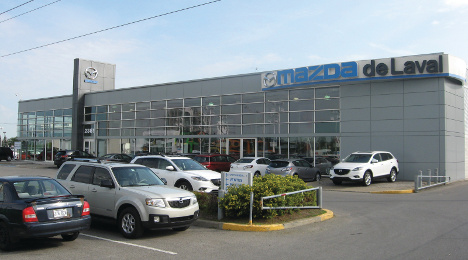
Mazda De Laval was focusing on certifying vehicles in-house long before the Mazda Canada certified pre-owned program hit the market.
Now, store president Richard Labelle says, the dealership capitalizes on the fledgling certified program — launched in 2012 — by promoting their “like-new” used cars, which don’t take long to hit the lots after Mazda De Laval adds them to their inventory.
In fact, Labelle says after a car comes in from auction or trade, the staff has only 24 hours to put the vehicle on the Web.
And the vehicle has to be inspected, cleaned, fixed and certified before it goes on the lot.
This quick turnaround takes training, says Labelle. He personally trains each staff member and says “buying the cars and doing the recon — we have a specific way we do it all.”
“We have salesmen that know exactly what is supposed to come with the car. The inspection has been done; repairs have been made. And when a customer comes in to the showroom, they know all this has been taken care of already,” he explained.
One of the oldest Mazda dealerships in Quebec, the store has been in operation since 1954, and is located in the Montreal Suburb of Laval.
With a facility on the Chomedey Boulevard, Labelle says the dealership gets “receives a high amount of traffic.”
So much so that the store has a separate 17,000-square-foot building for its used department, which houses an 11-car showroom, and never has less than 120 used vehicles for sale on the lots.
Labelle says a key part of the dealership’s customer service strategy is “the way we tackle used cars.”
The dealership sells an average of 500 to 550 used vehicles per year, and the used department has been a focus since the store’s inception.
In fact, before the Mazda Canada CPO program launched in 2012, Mazda De Laval was already certifying vehicles through an in-house program.
“We were already certifying our cars, giving all customers a six-month, 10,000-kilometer bumper-to-bumper warranty already,” said Labelle, noting this used focus has allowed the store to become one of the top Mazda certified retailers in the country today.
The store’s in-house program was so successful, in fact, that Labelle was asked to serve on the board to create the Mazda CPO program during its inception.
“We played a part in designing Mazda CPO program. It took about six months to get the CPO program up and running, and it was an instant success,” said Labelle.
And it won’t take Mazda De Laval’s customers long to become familiar with the Mazda CPO program when they walk into Mazda De Laval’s used-vehicle showroom.
“The building is all wrapped up with certified marketing — everywhere you look, you can read or see something promoting the CPO vehicles,” said Labelle.
A Like-New Experience
As customers stream into the used-vehicle facility at the dealership, Labelle said, many shoppers mistake it for the new-vehicle showroom.
He says this is because of the lengths the dealership goes through to make sure every used vehicle is “like-new” before it makes it onto the lot of the showroom.
“Let’s say the car has 50-percent brake power left when we get it, so we change the brakes, so it gives your customer peace-of-mind, and you can be sure you won’t have to come back to the dealership for repairs — even the wiper blades are under warranty. And there are no dents or dings on any of our used vehicles,” said Labelle.
And many of these same shoppers become repeat customers, says Labelle, providing the dealership with its best source of used inventory down the road.
“The best inventory outlet is basically our own customers, and our service customers, who supply trade-ins,” said Labelle.
The dealership does utilize auctions, as well, to purchase quality, used vehicles, but being part of a dealer group helps, Labelle said.
“We are in a dealership group, so we are buying off cars for the group stores. Mazdas, any kind of cars. We know the history. At auction, they are too expensive. Since we are in a dealer group, we can take cars other dealers within the group don’t want. We take Mazda or Audi and sell it ourselves,” he said.
And once the Mazda vehicles are certified, Labelle says they serve as a big draw to the store.
“You (the customer) can exchange the car in 30 days. You have an interest rate of 0.9 percent. You have two years of extra powertrain warranty. It’s a no-brainer. You have roadside assistance,” said Labelle. “We don’t hide CPO in the price of the car. The customer is very happy. They want the extra warranties.”
And the company’s used strategy seems to be panning out.
In fact, Labelle said, 95 percent of the store’s used customers end up buying certified Mazdas.
Editor's Note: For more on Mazda De Laval, see the Auto Remarketing Canada Digital Magazine Power 150 Issue, set to be released next week.

Ninety percent of a successful used-car dealer’s time, money, energy and efforts typically go into the processes that take place before a customer ever contacts the dealership: buying, reconditioning, photography, etc.
When I was in sales, many years ago, my first manager would always say, “Let’s go take our unfair share of the market!” At the time, our dealership was already No. 1 in our area, but we were trained to want more than just our fair share.All of this was said in reference to new-car sales, processes and procedures.
I believe the new-car market is a finite market, with very few variances. Manufacturers track market data, and dealerships are armed with concrete information about the sales that their market produces.
The goal of a new-car dealer is to outsell its market (pump-in versus pump-out) and have a greater market share in its city or area than its nameplate. There are, of course, limits to this – if a dealership’s nameplate has a 3 percent market share, it is unrealistic for the dealership to acquire 30 percent of the market.
This concept creates a finite market that new-car dealers really have no control over. However, what new-car dealers do have control over are sales processes and procedures — and, rightfully so, that is where the majority of their focus goes.
I like to call it the 90-10 rule: typically, 90 percent of a successful new-car dealer’s time, money, energy and efforts go into the interaction that sales associates have with customers. Good dealers consistently measure results in areas related to customer interaction in order to better improve their sales and take their unfair share of the market.
The other 10 percent of a successful new-car dealer’s efforts are typically put into other operations such as marketing, displays, POP (point-of-purchase), etc.
Does the 90-10 rule apply to used cars? I believe the answer is “yes,” but with one major difference — it’s backwards.
Ninety percent of a successful used-car dealer’s time, money, energy and efforts typically go into the processes that take place before a customer ever contacts the dealership (things such as buying, reconditioning, photography, etc.).
The other 10 percent of a successful used-car dealer’s efforts are typically put into direct customer interaction and sales.
When we try to sell used cars the way that we sell new cars, we are forgetting one major advantage that new-car sales has: the OEM. When you sell new cars, you are an agent of the OEM, and you receive all of the benefits that go along with the mutual goal of selling vehicles.
When you sell used vehicles, the concept of the OEM doesn’t exist, and you are essentially the OEM and the agent — a situation that has its own set of pros and cons.
Recognizing this void is the first step to filling it, and filling it requires a lot of work, but the benefits are massive. This is where the 9010 rule comes into play. We need to do for used cars what OEMs do for new cars. It’s worth mentioning that OEMs are doing a lot with CPO programs to assist dealers, but the reality is that they need to focus the majority of their efforts on new cars.
The lack of an OEM for used cars means that processes and procedures that don’t exist with new cars are a reality for used-car sales. Some new-car dealers haven’t put enough focus and attention on this point within their used-car operations.
These back-end processes include buying, reconditioning and market pricing each vehicle, as well as gathering all relevant historical and other information about a vehicle. All of this, properly done, will produce a qualified customer and will lead to a quick and profitable sale. The vehicles, dare I say it, will “sell themselves.”
We saw it happen with Japanese imports back in the early 80s, and why was that? Was it because when they started selling vehicles in North America they were able to attract the best sales associates and create a dominating sales process?
No. I believe it was because they created a superior product to what was available in the market at the time, and demand outpaced supply. As a result, the vehicles essentially sold themselves, and sales associates became product advisers and customer service representatives.
The market is ready to reward the dealers that can create a superior used-car product and experience.
If you put the work into what happens before the customer ever finds you, demand will outpace supply and the vehicles will “sell themselves.”
Remember, it all starts with you.
Richard Macdonald is the founder of RPM Solutions. Richard provides consulting, training and co aching services to new-car franchise stores to help them maximize their used-car department profits. For more information, contact Richard at (416) 894-1475 or [email protected], or visit www.rpmsolutions.ca.

To get an inside perspective on what digital tools dealers find most helpful to their business,
Auto Remarketing Canada turned to Josh Hatton, quality pre-owned car and truck manager at Midland Honda in Midland, Ontario; and Doug MacIver Jr., inventory and Internet manager at RideTime in Winnipeg, Manitoba.
Hatton shared insight on Web-based marketing and inventory tools, as well as why they are crucial if you want to be a leader in this industry. He also commented on why the human touch might not be enough anymore when working with market values and strict competition.
Over at RideTime, MacIver shared which mobile tools help his dealership keep its used-car lots stocked.
Josh Hatton, Midland Honda
ARC: Just how important are Web-based, digital tools to your dealerships’ every-day processes?
JH: I am currently in the process of moving from Midland Honda to Midland Chrysler, at both stores, however, we use digital- based tools for many things.
In fact, this job is almost becoming reliant on them if you want to be a leader in the industry. There are a few different tools we currently use that are great.
ARC: Are there any new Web-based, digital tools that help dealers source, stock and sell used vehicles that have shown up on your radar in the past year?
JH: On a marketing perspective, we are moving to the new TRADER V9 software as it makes the most sense to us currently. There are a lot of Web platforms out there, but TRADER seems to work well and with the new look, it is great. TRADER is also great for finding cars for customers when it is a rare car and hard to get from auctions.
ARC: What about tools that help dealers acquire inventory?
JH: For acquiring inventory, I love being able to go online at the auctions and source cars, but more sourcing comes from Powerband Exchange!
Powerband is a great system that not only helps me wholesale units I don’t think make sense for my lot, but it also allows me to network with great dealerships and find those vehicles that I do want.
I love Powerband because they don’t allow the dealer offering the car to bid against their own auction, so the numbers you are seeing are other people actually bidding. Another great tool is vAuto … It is powerful and made it possible for me to maintain a 15- to 30-day inventory supply all year.
ARC: What would you say in response to those who still value the human touch when it comes to acquiring and evaluating inventory?
JH: A good salesperson can overcome money if they know the car. However, market value is market value, and if you use the inventory tools properly, it will empower you as a manager and help your staff overcome a lot of objections, even on trade-in value.
ARC: Are these digital tools becoming consistently more important as the industry continues to evolve toward greater efficiency?
JH: Overall, the industry is changing and will continue to change. I am happy to be technical and working in a digital era; the plans I have moving forward are big and almost daunting.
But if I pull it of, it will be great for the store and allow me a chance to really push the digital limits available for marketing, acquiring and just customer service overall.
Doug MacIver Jr., RideTime
ARC: As an independent dealer, sourcing vehicles can be a bit harder. Are there Web-based and digital tools you turn to when trying to secure used inventory?
DM: As an independent dealer, we don’t have the luxury of ordering more inventory from a factory. There are definitely a few things that have helped us over the past year.
We have really enjoyed the new improvements to the DealerBlock from ADESA. The search functions are far superior. When inventory was at its most scarce, over the last year, we would look at thousands of vehicles to only end up with a handful. Anything that makes it easier to look at more vehicles is very valuable.
Manheim’s Simulcast going mobile has also been helpful. I can finally bid in live vehicles from my mobile device, and I love it. The whole world is going mobile, and I think Manheim should be commended for allowing dealers the ability to bid on live vehicles directly from their app. I’ve used the app on the go to bid on several vehicles over the past year.
ARC: How has the shift to digital and mobile sourcing and stocking changed the dealership environment?
DM: I’m sure if you are a dealer and are reading this, you’ve seen customers on your lot or in your showroom look up competitors’ inventory directly from their phone. Every salesman in our company has a computer at their desk, and we have a few iPads floating around the stores, as well. We do our very best to price and merchandise our inventory properly and invite our customers to compare us with our salesmen right in the showroom.
ARC: What does your setup look like?
DM: I wish my dad was still alive to see the setup I have in my office. I have two computers with four 27-inch monitors I use on a daily basis to purchase inventory.
Mobile is a powerful movement, and those who fight it will be left in the dust. For the last few years I’ve brought my iPad to the auction for the live sales and was the butt of several jokes.
I use my iPad and iPhone in the lanes to look up everything from condition reports to CarProof data. Last August, I attended a few live sales in southern California, and mobile device use in the lanes was very prevalent. It’s only a matter of time until we see more of it up here.
ARC: In today’s tight used supply environment, are these tools becoming even more important?
DM: I could talk for hours on why I think inventory is only going to get harder to get. Tools that aid in sourcing are going to continue to rise in importance but … If you don’t add discipline and extreme hard work to those tools, they are worthless. We look at and buy inventory seven days a week. All these advancements in technology hasn’t allowed us to work less, but rather achieve more during the long hours we put in.
Editor's Note: For more insight into how to digitize your dealership, click here to see the July/August edition of Auto Remarketing Canada Digital Magazine.
Concern that advertisements for new cars under $10,000 may be misleading for consumers prompted The Ontario Motor Vehicle Industry Council — which enforces the province’s Motor Vehicle Dealer Act and Regulations — to issue an open letter to Ontario’s dealers last week.
The crux of the issue: dealers should be careful about reusing OEM advertisements without altering for additional fees.
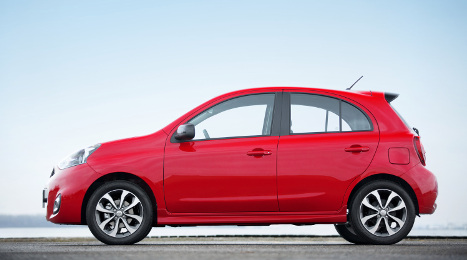
Recently, many manufacturer ads have popped up promoting a number of new models with MSRPs below $10,000 before freight and pre-delivery inspection, such as the 2015 Nissan Micra.
The manufacturer may be able to advertise a vehicle for the attractive price of $9,998, but OMVIC cautions when dealers use the same manufacturer advertising without revising, the only additional fees that can be added are HST and the actual cost of licensing that buyer.
And the ad must state that licensing and HST are additional costs.
“This is not an all-in price. Dealers who use manufacturer’s ad templates without making the necessary revisions to ensure compliance do so at their own peril,” the regulator said in the open letter released last week.
Of course, manufacturers are not subject to the same advertising guidelines, as they are not regulated by OMVIC.
Though a new car for under $10,000 may draw the attention of a potential shopper, OMVIC cautions these advertisements are misleading if fees such as fuel and tire stewardship fees, admin fees, and more push the price beyond the $10K mark.
OMVIC shared that dealers who have violated the all-in price requirements should expect to receive a Notice of Complaint.
They could also be slapped with the following fines and disciplinary actions:
- $25,000 fine for breaching the Code of Ethics (discipline hearing)
- $250,00 fine for a corporation (for breaching the MVDA)
- $50,000 fine and/or jail time for an individual (for breaching the MVDA)
- Issuance of a proposal to revoke registration
Dealers who need more information can contact OMVIC’s Business Standards Team at [email protected].
Buy-here, pay-here and lease-here, pay-here financing has seen significant growth in popularity in Canada during the past few years. In the United States, there are approximately 28,000 dealers providing this form of financing to customers.
These dealers understand that BHPH financing can be very profitable if it’s done right, but it can also very costly if you don’t have the right policies, procedures and controls in place.
In the United States, the BHPH business is considered a mature segment of the special finance industry. For BHPH dealers the target market for this financing are people with poor credit or no credit: people on a fixed income, immigrants, people with low credit scores, and people who cannot get traditional financing.
Their credit status may have been damaged as a result of a job loss, a divorce, a business failure, a mortgage foreclosure or similar circumstances. They are not bad people; they are people who need help reestablishing their credit status.
So why are dealers in Canada well positioned to take advantage of this form of financing? The answers have a lot to do with the increased age and mileage of used vehicles still on the road combined with advancements in technology that have occurred in the BHPH business in the United States.
- Vehicle Inventory
Dealers providing customers with BHPH financing are generally offering older, high-mileage vehicles that provide customers with reliable transportation in a financing program where the term is short and the payment is affordable.
In the February 2013 issue of the Automotive Industries Association of Canada, DesRosiers Automotive Consultants stated that the average age of light duty vehicles in Canada was 9.26 years. Currently that would make the average age closer to 10.5 years old.
With the appropriate reconditioning, these older, high-mileage vehicles provide an ideal source of inventory for BHPH financing. In the past, this type of vehicle might have been considered strictly for wholesale at auction.
Today, more dealers are recognizing the value of these vehicles in the form of BHPH financing. Franchised new-car dealers with multiple locations have an upper hand when it comes to acquiring vehicles for their BHPH inventory because of the higher volume of trade-ins.
- Customer Retention
One of the objectives of BHPH financing is to help customers rebuild their credit status. A BHPH dealer has the responsibility to help the customer select a vehicle that has financing payments the customer can afford. BHPH customers are typically not good money managers, so missed payments or late payments are part of the reality with BHPH financing.
The successful BHPH operators will work with these customers through the term of the financing, keeping them in their vehicle, making payments and getting caught up on late payments. Dealers with this approach view repossessing the vehicle as the last resort. The end result is the customer has paid of the vehicle financing with the help and patience of the dealer. This relationship-building approach to BHPH financing develops strong customer loyalty, in addition to repeat and referral business.
- Technology
Advancements is technology have had a major impact on the BHPH industry. Not long ago, a BHPH dealer required customers to show up at the car lot in person to make payments, usually in the form of cash. This made collections time consuming and inconvenient, and required handling large amounts of cash.
Today, advancements in payment technology provide customers with a wide range of payment options including: payments through the dealer’s website, third-party payment portals, online banking payments, direct debit payments and ACH (automated clearing house) payments.
The BHPH industry has shifted from “in-person payments” to “convenience-based payments” to achieve efficiency in their collections process and improved delinquency rates. In addition to advancements in payment technology, the BHPH industry has seen a major impact from advances in Starter Interrupt Technology (SID) and Global Positioning System (GPS).
SID technology permits a dealer to electronically notify customers that a payment is due. If required, the dealer can disable the starter temporarily until the customer contacts the dealer to discuss the past due payment. This collections technology helps customers remember their payment date and reduces the dealer’s need to contact customers by phone.
GPS technology has helped improve the asset recovery part of the BHPH industry. If a customer defaults on a loan payment and refuses to contact the dealer or make a payment arrangement, this new technology permits a dealer to locate and recover the vehicle quickly and efficiently.
- Resources
Today, there are a number of resources available to help a dealer start a BHPH operation or improve their current BHPH business. These resources include cash flow and profitability projections; policies and procedures manuals; staff training; guidance to determine the right BHPH business model; and even a comprehensive BHPH start-up program.
Also, dealers can now participate in a “20 Group” designed specifically for BHPH/LHPH dealers in Canada. This time-tested form of networking provides dealers with analysis and comparison of the BHPH operation with other BHPH dealers across the country.
These resources mean that a dealer doesn’t have to learn the BHPH financing business by trial and error. The most successful BHPH dealers will tell you that “the school of hard knocks” is an expensive form of education in the BHPH business.
For these reasons and more, this truly is the time to be in the BHPH business.
Mark Dubois is president of Dealer Performance and Consulting. He can be reached at (941) 729-2357 or [email protected].
As the ways to absorb content continues to expand — social media, mobile offerings, new review sites and more — new ways to access information will continue to influence the average consumers’ car buying expectations.
In fact, Shawn Vording, director of project management at CarProof, says technology is the top reason why customer expectations have changed in the past decade.
“A consumer that has taken the time to research and educate themselves not only will know more about a certain make/model/year than most sales people, but will also know more about a specific car sitting on a dealer’s lot than most sales people,” Vording told Auto Remarketing Canada.
The online environment helps to put consumers more in control of the sales process and poses new challenges for dealers looking to ensure customers leave happy and satisfied.
Shoppers are now familiar with information such as: new models, vehicle reviews, safety rating, MSRP, list prices, supply and demand, interest rates, incentives, residual value, aftermarket warranties, total cost of ownership, average cost of repair, your inventory, competitor’s inventory and more.
And this type of knowledge can increase customers’ expectations tenfold.
These days, dealers can have an effect on customer expectations before the customer even makes it onto the lot, through mobile offerings, websites, search ranking and more.
Keep this statistic in mind: Ninety-four percent of all used-car purchases start their search online, Vording pointed out.
“Dealerships that concentrate on SEO, maintaining their online reputation and differentiating their business and product from competitors online are setting a virtual expectation,” Vording said.
He pointed out the online experience needs to be examined and held to the same standard of customer service as the dealership environment.
This trend, of course, may make dealers’ and sales-peoples’ jobs a bit more difficult, but if you step up to the plate, customer loyalty is within your grasp.
In fact, Vording says satisfying customer expectations is crucial to ensuring customer loyalty.
Vording provided the following statistics:
- On first transaction, a “satisfied” customer has a 22 percent chance of returning to your business.
- A “completely satisfied” customer has a 70 percent chance of returning.
One of the keys to reaching past the simply “satisfied” marker is making sure every element of the dealership is working as a team.
“The difficult environment that exists in a dealership is that there are multiple departments with separate business goals that impact sales, the business office and service. It is critical that there is accountability and a way to measure the impact every department has on the customer experience to ensure that all employees who interact with a consumer are contributing to improved customer satisfaction,” Vording said.
“A culture of exceeding expectations is necessary, which involves visible leadership from owners and managers, a way to measure employee and department performance and on-going training and recognition for employees,” he continued.
Opportunities in the Service Department
When highlighting opportunities to ensure customer satisfaction, Vording pointed out some of the service department’s potential remains untapped.
“There is a tremendous opportunity in the sales process to better utilize departments within a dealership — service, body, parts. There is no arguing the business logic (of its importance) on the front end of the sale, post-sale and future sale,” he said.
On top of using the service department to ensure customer loyalty, all dealers know used inventory is hard to come by these days.
But by connecting there service department to your customer-satisfaction strategy, dealers may find trade-ins and second-time buyer numbers increase.
When asked whether tools like no-charge service mainly used for new cars could also be used on the used side of things, Vording had this to say:
“In order to capitalize on the above opportunities and create an ROI on no-charge services, dealers must have process in place which starts with strong relations interdepartmentally, improved training and expectations for customer facing staff, and technologically powerful database management/integrated CRM to manage the opportunities,” he said.
Problem Areas
Vording also covered a few challenging areas that might make or break a deal and/or hurt customer expectations.
One of these challenges, of course, is the price negotiation process.
“There are two points of potential contention that exist within the negotiation process: What is my trade worth, and what am I paying for my new/new to me car?” Vording pointed out.
Because vehicles are one of the few consumable depreciating products that exist today, price discrepancy can cause very real problems when it comes time to close a deal.
Because of this, Vording said, many dealers are transitioning to a business model that prices the cars competitively, and there is no negotiation.
“Success with this business model relies on very accurate buying and pricing as well as a strong marketing/awareness campaign to attract consumers,” Vording said.
CarProof expects that predictive pricing models will continue to improve through data and technology, and dealers will successfully transition to a no-haggle format in the future.
As for the trade-in side of the transaction, there are many tools, such as CarProof’s RECON, that calculate the cost of reconditioning a vehicle.
“The product has been designed to assist dealers in demonstrating the costs that are associated with getting a car front line ready from trade-in status and disarm the consumer’s expectations by leveraging transparency through the CarProof brand,” he explained.
Regardless of what tool you choose to use, being able to provide the data behind a trade-in price will prove helpful with today’s informed auto buyer.
“For both sides of the transaction equation, transparency and education combined with solid purchase and pricing practices make the buying experience positive for the consumer,” Vording said.
Lastly, financing can also throw a wrench in customer satisfaction.
Vording says this does not pose quite as much of a problem, though, as legislation in most provinces is geared to create transparency when a dealer arranges financing for a customer.
The said, Vording had the following advice: “For a positive buying experience, disclosures must occur (dealer incentive to finance/finance admin fee) before finalizing the bill of sale, or on delivery when there is an extremely high need or emotional attachment to the vehicle.”
Vording said dealers can avoid trouble at this step by introducing the finance manager to the customer and having their first point of contact — the salesperson — engaged and present in the process.
Overall, creating transparency in the negotiating and financing process is key to customer satisfaction and making sure that customer comes through your doors again.
Canadian dealers now have a new dealer management system to choose from.
Reynolds ERA-IGNITE is now widely available to Canadian auto dealers after four years in the American market.
"Delivering ERA-IGNITE to dealers in Canada is the first step in helping them capitalize on the changing retail environment of the automotive industry," said Ron Lamb, president of Reynolds and Reynolds. "ERA-IGNITE is the foundation of a retail management system that extends beyond the traditional DMS.
"It offers our customers greater flexibility and functionality to help them manage and grow their business at a time when the retailing battle is engaged consistently beyond the four walls of the dealership."
The company explained ERA-IGNITE is the "foundation" of the company's vision for Reynolds Retail Management System.
The company contends ERA-IGNITE helps dealers save time with its graphical user interface and allows dealers to "work more effectively with additional business information available at users’ fingertips."
Ian Reilly, vice president of sales in Canada for Reynolds, said, "We are excited about bringing ERA-IGNITE to the Canadian market. Initial customer reaction to ERA-IGNITE from both our pilot installations and our road shows has been tremendous. We plan to continue touring across major Canadian cities in 2014 so dealers can experience first-hand the advantages of ERA-IGNITE and our other retail management solutions."