When asked how the millennial generation has changed the game for automotive dealers, Michael Wyant, general sales manager at Vaughn Wyant Automotive Group, said dealers are basically playing a whole different sport.
“There are so many ways to reach out to these people. I think the biggest thing for us is whatever medium you find effective in driving traffic to our site, you must make sure that the site itself is user-friendly, it’s optimized, and it’s self-responsive, so that when somebody goes onto it they have a great experience,” said Wyant. “There are thousands of ways to drive traffic to your site, but the challenge is once they get there, do they want to stay there?”
According to research shared with Auto Remarketing Canada by Kevin Gordon, co-founder and managing partner at Convertus, by the year 2025, Generation Y is expected to account for 75 percent of all vehicles purchased.
“The question is, will they purchase from you?” asks Gordon.
Times Change, And So Do Motives
Times change, and so do shoppers’ reasons for making large purchases — including that of buying their first vehicle.
Norman Hebert, vice president of corporate development at Groupe Park Avenue, said one of the first things his dealer group noticed about millennials is they certainly may not want to buy a car the same way their parents did — or for the same reasons.
For example, the classic parent of a millennial may have been quick to get their driver’s license when they turned 16, so they could purchase a car, and in doing so, their freedom.
On the other hand, “when we think about millennials, we think of them looking at the car as perhaps more of a utility tool rather than that purely emotional, ‘I can’t wait to have a car feeling,’” Hebert said.
Since these purchases are more often logical than emotional, Herbert said price begins to come into play, as well.
“I think we see that millennials may have a budget to buy a new car, especially with interesting prices in some of the entry-level cars, like the Nissan Micra, etc. However, they may not want to allocate that much into buying cars. Therefore, the pre-owned space becomes even more important,” said Hebert.
Meeting Millennials Where They Are
There are still a variety of opinions spanning the gamut on dealership involvement in social media. That said, Wyant said there is one thing for sure: you must have a presence on social media and maintain a good reputation.
The most important thing on social media — well, being social, of course.
Wyant said the focus should be on relevant and entertaining content — not on selling cars and posting inventory — and the content you are pushing out on Facebook or Instagram has to be to people are interested in and connect with emotionally.
Dealers have the option of utilizing an emotional approach, but they also can employ their connection to their communities.
“On social media, you are going to be planting seeds in people’s minds as to why you are a good business to buy a car from, and hopefully sometime, when they get to the right phase of the purchase funnel, you are going to pop up in their brains because of something you have done in the social digital world as opposed to an ad that you put in the newspaper,” Wyant explained.
For millennials, their purchases often reflect their images, and this includes vehicles.
“Millennial buyers want to be able to relate to the person they will eventually be doing business with, and they would probably rather do business with someone who has similar values that are aligned with theirs,” Hebert said.
At Groupe Park Avenue, the dealer group uses its social media platforms not only to share relevant content about the industry or about vehicles and remodels, but also as a great avenue to share community involvement and charitable work, and as a way to get some of the more relational content in front of shoppers.
Gordon also pointed out millennial shoppers rely heavily on third-party review websites to help them make educated purchasing decisions — in other words, online reputation is key.
Do you know how many reviews your dealership has on Google? Have you taken the time to respond to each review, whether it is positive or negative?
“If you have negative reviews on any of these sites, it’s important to respond to those people and show them you not only hear them, but that you care about them,” said Gordon. “It’s also equally important for you to show the rest of the world that you stand care about your customers and are willing do what it takes to turn negative experiences into positive ones.”
Which review sites are most important? In priority order: Google, Yelp, Facebook and DealerRater, according to Gordon.
One way Wyant says his dealership grows their online reputation is through store promotions — but the dealer group enlists outside help, as well.
When VWAG does promotions that are geared toward the millennial generation, the dealer group utilizes connections with local media companies that can help get the message out to a broader audience, and this includes social media in a big way, Wyant said.
While as the dealer group may have a couple thousand likes on Facebook or a couple hundred Twitter followers, Wyant says that’s not enough to get your message out there.
“We have done promotions combined with local radio stations that have reach in our marketplace and that gets the word out there to potential customers, and to people following the promotions on your social media platforms,” said Wyant.
“Because we don’t have the cool factor that a pop radio station might have, we have had success doing promotions in partnerships with other local companies, such as radio, that would have a further reach,” Wyant concluded.
The Importance of Transparency
For millennials, the old adage, “If you always tell the truth, you never have to be afraid of getting caught in a lie,” rings particularly true.
That’s according to Wyant, who said he uses that phrase often with his staff in regards to marketing. He explained when selling a used vehicle to a millennial, “there’s no hiding anything”. And if you don’t disclose everything, such as previous accidents, they are likely to take to social media to alert their peers to dishonest business practices.
Dealerships now have to be more upfront, which means everything from sharpening internal appraisal logistics, to marketing vehicles — and above all, increasing transparency.
Wyant said. “Some problems can’t be solved, but most problems can, and we have to make sure that we immediately put forth the effort to solve the problem to get a more positive outcome and review online.”
Hebert also asserted millennials simply do not want to deal with negotiation — which ties into price transparency, as well.
“That is just something that has been easily taken out of their everyday life, just because of access to information,” he said. “And coming into a car dealership and having all this confusion around where a car could be priced at, it’s a bit confusing for them,” said Hebert.
“More transparency on the showroom floor is going to be really, really important,” Hebert said.
Hebert explained transparency on dealership websites is particularly important, and tricky calls-to-action can deter millennials.
“When a millennial clicks on check availability on your website, he or she expects not to see a form where they have to put in their name, they expect to see yes or no and how many,” said Hebert. “So, I think we need to be a bit cautious in what we are asking people to convert on.”
Remember those old contact form leads that had over 10 fields to fill out? Scrap those, or don’t make all questions required information.
And above all, don’t request information the millennial shopper hasn’t volunteered.
For example, if a millennial-age shopper submits a contact form and doesn’t give a phone number, it makes little to no sense to email them asking for their phone number.
“They have changed a lot, even in the last two or three years. It is dramatically different, and we have to accommodate people. Otherwise, they aren’t going to buy anything from us,” Wyant said.
Technology, Value Top of Mind
With the millennial generation, there are features that go far beyond racing to the bottom of the price barrel that will attract a potential sale.
Now, it’s more about why the product is better, said Wyant, and it revolves primarily around the demographic of vehicle buyers.
“The new Mercedes CLA buyer is going to respond a lot to that technological value driven proposition a lot, where for people leaning toward a Mercedes ML, it’s a different message that you put out there,” said Wyant. “You really gear your marketing tactics toward that specific vehicle’s demographics, and you look at any of the stuff that appeals to the millennial demographic.”
For example, focusing on the technology side of the value proposition, rather than a more conventional price-based approach.
“This has been particularly popular with younger shoppers,” Wyant added.
Hebert proposed dealers focus on content regarding total cost-of-ownership and sales transparency in the car-selling process for this age group.
And when it comes to vehicle features, technology is always a draw for the younger crowd.
“They are interested in whether their smartphones connect well with their vehicles,” said Hebert. “And if you touch on this on-the-go lifestyle in some of your marketing videos, you will get some good hits with that kind of content.”
And millennials’ obsession with tech doesn’t fade away when they enter the dealership.
Initiatives from manufacturers to aid in ramping up tech in-stores, such as tablets for salespeople, have grown considerably over the last few years.
And at VWAG dealerships, Wyant said all sales staff have tablets, and Mercedes-Benz, Audi and Porsche, offer applications for the customers to use.
VWAG dealerships also tout flat-screen TVs that run a similar type of application, but through what Wyant called a “customer build center.”
Millennials Shifting Dealership Marketing Strategies
Many analysts agree that these days, marketing to millennials should be focused on the tier-one manufacturer level.
According to Wyant, most Generation Y shoppers have most likely already selected the vehicle they want before leaving the house, mostly via perusing OEM websites and automaker advertising and information.
Gone are the days of running newspaper ads and slashing your prices for Saturday-only sales.
“We haven’t been in the newspaper for over a year, and our business has not been affected in a negative way whatsoever except reducing our budget,” said Wyant. “You really have to look at what consumers want today. They want value, and they want to associate with a brand that they can relate to. That’s the responsibility on a tier one level.”
According to Wyant, the responsibility on a tier-three dealer level is to make sure dealerships have the right inventory marketed online.
“When the customer gets to the dealership website in that particular part of the purchase funnel, and they find the dealership has an optimal online experience, then they will be much more likely to connect directly with the store,” Wyant said.
“A responsive, optimized website saves customers time; that’s the most important thing these days. They walk into your dealership, and they know what they want,” Wyant continued. “There is no point in putting them through your typical eight-step selling process that we might have done 10 years ago.”
Millennials expect the process to be sped up, and this shift has changed dealership marketing tactics dramatically.
“Make sure the content on the website is current and detailed and relevant so that when somebody does find you, they have a great experience online, which would then convert them into a showroom prospect and hopefully a sale,” Wyant concluded.
It goes without saying these days, the millennial shopper is searching for an optimal digital experience, which is important across all channels.
Hebert said dealerships also have to ensure the transition for shoppers from mobile to desktop must be smooth and fluid.
For example, millennial consumers expect to be able to save information and vehicles on their mobile and be able to transfer that information over to their desktop browser.
Hebert noted another important piece of the marketing puzzle for millennial shoppers is word-of-mouth.
“And word-of-mouth can come through channels like Facebook or online reviews, or simply through the traditional form of vocal communication,” said Hebert.
There is no disputing millennials are primarily searching for vehicles in the digital space. And transparency both in-store and online will continue to become more and more important as the generation continues to change the automotive buying and selling landscape.
Find this story and more content stemming from the Auto Remarketing Canada Conference in our March/April Auto Remarketing Canada Digital Magazine.
Following suit with its parent companies, Chrysler Canada Inc. announced Wednesday it has changed its company name to FCA Canada Inc.
The naming scheme falls in line with the FCA global parent company, Fiat Chrysler Automobiles N.V., which changed its name in October. FCA Canada is a wholly owned subsidiary of FCA US, which rebranded in December.
The rebranding follows FCA Canada’s January sales figures announced on Tuesday, where the then-named Chrysler Canada sported the most vehicles sold of any automaker in the country.
The company says it sold 18,054 cars and trucks in January, roughly 2 percent more than the same month in 2013. Out of that amount, year-over-year, truck sales increased by 8.5 percent while passenger car sales dropped 34.7 percent.
Canada’s most sought after vehicles of 2014 were all over the map – both literally and metaphorically.
The top 10 vehicles for the year, provided by autoTRADER.ca, run the gamut of variety, ranging from rides for those city-dwelling, economy-minded consumers, to those with serious performance in mind, both on the road and off. Following is the overarching list provided by autoTRADER.
autoTRADER.ca Top 10 Most Searched Vehicles for 2014
- Honda Civic
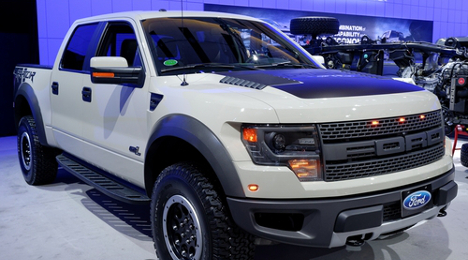
- Ford F-150
- BWM 3-Series
- Ford Mustang
- Jeep Wrangler
- Honda Accord
- Chevrolet Corvette
- Honda CR-V & Mazda Mazda3 (tie)
- Porsche 911
- Ford Escape
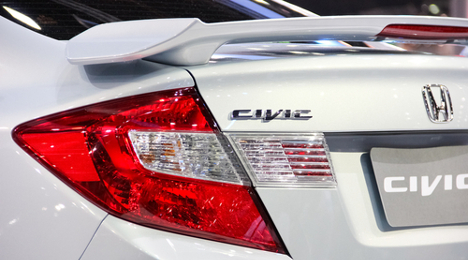
The battle for the first position could not have been between two vehicles much more different than one another. Last year’s most-searched, the F-150, found itself outpaced by the demand for information on the Civic. This struggle was reflected in six of Canada’s 10 provinces, where both the Civic and the F-150 were in either first or second place. In the end, though, the Civic accounted for 3.57 percent of all unique searches on the site, while the iconic pickup made up 2.68 percent.
“The vast majority of Canada is unequivocally truck country,” said Ian MacDonald, autoTRADER.ca’s director of marketing. “But this year’s list proves that there is more than healthy demand for passenger and city-friendly vehicles, both import and domestic.”
The Honda Civic celebrated its 17th consecutive year as Canada's best-selling passenger car, as well, garnering sales of 66,057 units in 2014 — over 15,000 more than its closest segment competitor. Dave Gardner, Honda Canada's vice president of sales and marketing, said he values the trust that Canadian customers have put in the Civic.
"Nearly every Civic sold in Canada is built for Canadians, by Canadians, right here in our Ontario manufacturing facility," Gardner said. "Seventeen years is an accomplishment that the entire Honda family can be very proud of; from our over 4,000 associates in Alliston, to our regional and national staff and thousands of associates at our 231 Honda dealers across the country."
The variety of interest for the year was wide – economy cars, pickups, sports cars, crossovers, off-road 4x4s, iconic muscle cars and luxury imports – but one interesting item did not make the list: “dream cars.” Outside of the 911, which can almost be considered a bargain in the world of high performance, your Lamborghinis, Ferraris, etc. typically fall into the category.
“It’s normal to see at least one or two ‘dream cars’ make the list, but Canadians clearly shopped more with needs – not wants – in mind this year,” MacDonald said.
2014, like many before it, was a year of ups and down. From art, sports and technology, all the way to the fear of disease, gains and losses were present in the ever-changing tapestry of human history. A lot of these topics are reflected in Canada’s top most-searched items on Google for 2014, which includes Robin Williams, the World Cup and the newest iPhone 6 in the top 3, continuing on with the Winter Olympics, Ebola, ALS, and more.
General interest in autos and vehicles, overall, followed suit with those shown for the U.S., peaking as high as 30 percent of all Canadian Google searches toward the end of July. Interest around Nissan's tiny success, the Micra, which helped the manufacturer reach it’s new-vehicle sales goal of 100,000 a month ago, remains large.
In regards to the used-car market, the searches for “used car” via Google remained relatively stable throughout the year, showing very little similarity to the extreme seasonality of interest in the U.S.
The heat map below shows the percentage of Google searches for “used car” during 2014 in each of the provinces, being led by Ontario, British Columbia and New Brunswick overall. (Keep in mind that searches in French are not included in this data.)
Amongst all automotive-related searches, inquiries about Ford topped the list, even beating out generic searches, such as those for “car.” The Japanese automakers Honda and Toyota also followed, preceding another Big 3 member in the form of Dodge.
It goes without saying that technology has made changes to nearly every area of business operations for companies large and small. Car dealerships are certainly no exception.
However, many business people get stuck doing things the way they’ve always done them, failing to take advantage of the possibilities new technology can offer. As a manager or owner, you owe it to your dealership to continually seek out technologies that can streamline operations and boost profitability.
Gain a competitive advantage from technology
There’s no question that the dealership that can harness technology products most effectively will have a competitive advantage. Technologies that save you time, increase your efficiency or drive sales all help you stay ahead of competing dealerships.
- Using a mobile phone and email helps make you more accessible to customers.
- Developing a mobile-friendly website with features like chat helps showcase your vehicles and drive sales.
- Making use of social media lets you engage with customers and build trust.
- Choosing and using the right business software streamlines operational processes.
- Using smartphone apps — such as photo capture or appraisal tools — helps you evaluate vehicles on the spot before buying.
One technology in particular that’s gaining momentum among dealers is the online auction.
Online technology improves auction process
The technologies that will give you the greatest advantage are ones that specifically improve processes you do frequently, or that currently take up a lot of time.
Sourcing used vehicle inventory occupies a lot of your time as a dealer and takes you away from sales. Acquiring and disposing of vehicles more efficiently can reduce costs and boost profits.
That’s where technology can help. Purchasing and selling vehicles at auction without leaving the dealership saves time and costs less than a physical auction.
The technology offers specific advantages as well. Auction websites offer time-saving tools, such as search features and the option to set up alerts when a particular vehicle comes up for auction. Some sites are mobile-friendly, so you can receive text alerts and view vehicles right on your smartphone or tablet.
And selling through online auctions is just as efficient. Snap some photos with your smartphone, upload them to the site along with the vehicle details, and in a few clicks you’ve exposed your vehicle to a much wider market than is possible at a physical auction.
Choosing the right auction site
The ongoing evolution of technology products is accelerating. New smartphone apps for auto dealers seem to pop up all the time and new websites and software are released regularly. As a general manager or used car manager, how can you evaluate the technology options available and select the ones that will benefit your dealership?
When it comes to online auctions, selecting the right site comes down to how well it integrates with the processes and technology you’re already using.
Here are five key things to look for when choosing an online auction site.
- Works on multiple platforms
Choose an auction site that works equally well on your computer, tablet or smartphone. This lets you respond to opportunities whether you’re at your desk, on the lot or on the road.
- Scalable
Look for a site that remains cost-effective, whatever the volume of purchases or sales you make.
- Integrates with multiple solutions
You’ll save time and money if the information you enter in the auction site can be carried through to your sales site.
- Accessible anytime, anywhere
When the site is available 24 hours a day, seven days a week, you’ll be sure not to miss that particular vehicle you’ve been looking for.
- Ties into your existing processes
A site that integrates with other technologies you’re already using will save time in the learning curve and be more time-efficient and convenient when you use it.
To gain – or maintain – an advantage over your competition, your dealership needs to continually adopt the new technologies that make sense for your business. Online auctions make it easier to get the right mix of vehicles on your lot and to keep your inventory fresh. And when you choose an auction site that works with the platforms, processes and technology you already use, you’ll be able to maximize your efficiency and minimize your cost.
Robert Rath is the VP of dealerhip products and business development at TRADER Corp.
Editor's Note: This column ran in the Auto Remarketing Canada Year-End Market Intelligence Report. Check out the latest digital magazine issue for more info on marketing in 2015 as well as a recap of the year's biggest stories.
There needs to be balance in data ownership. The dealer should own both their physical inventory and their digital inventory, as well.
It’s that time of year when late-season models are blown out, Canadians retreat inside to watch American Football, and evenings — they start at 4 p.m. now — are spent catching up on “True Detective” and other cable shows you’ve pretended to watch over the past year.
We automotive columnists also take this time to remind you of what important trends defined the past year, and what we can’t afford to overlook in the next 365 days ahead.
Through the past three years, most articles like this one talked about mobile. We’re finally past that now. With consumers once again directing the pace, 2014 was the year of responsive design as people continued the “Great Screen Migration” from desktop to mobile; the car buying cycle between first consideration and purchase has also been abbreviated, now taking less time than ever thanks to our phones.
If your dealer website doesn’t have a responsive design optimized for smartphones yet, then your bridge group probably meets on Friday nights, and your television set doubles as a piece of furniture, perfect for holding a fern or bowl of penny candies.
When it comes to adopting new marketing trends, dealers have for the most part been ready and willing; dynamic remarketing, Gmail Sponsored Promotions, and YouTube advertising are all sliding nicely into marketing strategies.
We’re also ready to drop a few stale platitudes from our PowerPoint slides: Content has been “king” for a while, but content for content’s sake is crap. The king got his walking papers and is now a potash miner in Saskatchewan. Moving forward, your audience is all who matters, and you need to create content for them.
How? I’ll give you a hint: get back to the basics, and make sure you are taking great pictures and writing great descriptions for both your new and used inventory.
The Digital Dealership: You’re The Gatekeeper; Are You Also The Key Master?
Whether you’re talking sports, sales or basket weaving, it all comes back to the fundamentals. Managing your digital dealership is no exception. I’ve always been a passionate believer in putting in the extra time when merchandising your online inventory. This is the arena where most buying interactions start off and increasingly end these days, so the digital dealership needs to be among your top priorities. (We won’t be retiring that phrase for a while.).
But with technology and sales platforms evolving so rapidly, it’s become too easy to outsource the new tools you don’t quite grasp yet, slowly giving up control of your business, piece by piece.
When we talk about control, we are mostly talking about data: in this case, who controls your inventory photos, descriptions, and where and when you can display them.
Moving into 2015, dealers are going to want to be very clear on who maintains ownership and control of their inventory data. Of course you own the physical dealership, but do you really own its digital equivalent? If you haven’t considered that question to exhaustion by now, it might be a good time to review some of your contracts.
So far, the CEO of IBM, Virginia Rometty, has best explained the situation: “We will look back at the 21st century and will look at data as a natural resource that powered the century.” Collecting it, filtering it, managing it — this is where competitive advantages will be made or surrendered.
Now you might be thinking, well, how does that apply to me as a car dealer? How do my car pics and content blurbs affect me beyond the minor annoyance of creating and posting them?
Let me enlighten you.
Read the Fine Print
Your online inventory, or your data, is a powerful resource for a number of suppliers for a number of reasons, most of which are too technical to be understood by the general population so far. Some of these suppliers believe that because they undertake some work for you that they should be the ones in control of your data. They believe that they should have the keys to the digital dealership.
And quite often, dealers aren’t informed enough to realize the consequences of this, so they happily hand them over, just glad to be relieved of the weight.
Some of the contract terms we have seen are ridiculous, bordering on oppressive. For instance, would you sign off on something that gave a supplier the following:
The ability to tell you what inventory you could post on your own website. (Especially your own inventory!)
The ability to tell you on which thid party sites you are allowed to post your data.
Or my personal favorite:
How would you feel if a supplier told you that you could only post your inventory on your website for 60 days? After those 60 days, you can no longer post your own inventory on your website or other third party automotive portals.
I mean, I’m all for eliminating aged stock, but what are these guys thinking trying to dictate to dealers how, when, where and how long they can post their inventory! To be fair, they were given the keys.
My point is that there are suppliers in the industry who will bury these terms on Page 15 of an agreement hoping that you as a dealer will not read every word, or at least not understand their consequences. 2015 will be the year where dealers can no longer shrug their shoulders and claim ignorance.
There needs to be balance in data ownership. The dealer should own both their physical inventory and their digital inventory, as well. And should a supplier provide you with a valuable enough service, maybe you’re okay that they use the data for some other, beneficial purpose, too.
Don’t let apathy and auto-renewing agreements take control of your dealerships data.
Taking a Step Ahead into 2015
What can you do right now to get your data ownership reconciled for 2015?
Review your contracts. Find out where you might be surrendering ownership of your inventory data. Consult a lawyer if you don’t have the necessary know-how.
Ask questions of your third-party providers. You listings are your livelihood. Ask your third-party providers under what conditions you would be sacrificing control when it comes to advertising your online inventory.
Take more photos. Would you be excited about an online dating profile that lacked a photo? Whether your first thoughts suggest laziness or a cover-up, your customers are just as turned off when your inventory lacks a picture. Yet still so many third-party sites leave the “Photo Coming Soon” placeholder in for months.
You don’t need to merchandise as well as Harry Rosen to sell cars online, but you do need photos and winning descriptions. So get some.
We don’t think of a greasy hamburger, salty fries and a pint of soda to be a healthy meal anymore, and we don’t trust deposed Nigerian princes with our rainy day fund, no matter how rare the opportunity. So in a time where data is becoming the defining natural resource of our time, it’s time to be smart about it. Take control of your inventory data, and resume control of your digital dealership.
A proud Edmontonian and graduate of the University of Alberta, Duncan Cochrane’s experience in the advertising industry dates back to the days of the Bargain Finder. Duncan immediately found a home in traditional advertising working with car dealers. Seeing the industry shift to digital, he joined Strathcom Media and for the last three years has spread the gospel of data-driven decisions to dealers across Canada.
Dealers who advertise their vehicles on the popular auto classified site MonsterAuto.ca now have another way to make their store stand out.
Mobials Inc. — a syndicated car dealer review program — announced a partnership with Monster Auto to integrate its ReviewMii car dealer reviews into the site.
This news adds to an extensive list of auto classified sites the product already integrates car dealer reviews into, such as CanadianBlackBook.com, Auto123.com, AutoandTruck.ca, CarsGone.com, OccasionEnOr.com, CCAQ.com and CarrExpert.com.
And co-founder and chief executive officer of Mobials James Hayes said even more publisher announcements can be expected soon.
“The reason we started Mobials is simple: Create something that solves a problem and is truly useful to dealers,” said Hayes.
Hayes asserts dealers don’t have a reputation management problem; instead, they have a ‘how do you get customers to review us, and how do we capture more customer referrals’ problem.
The ReviewMii product is designed to offer dealers a mobile way to capture customers’ reviews, as well as “get customers get customers to share them with their friends and family on their social networks, and then help the dealer differentiate themselves from their competitors by syndicating the reviews to the classified sites where they market their inventory,” the company explained.
“Monster Auto is very excited to partner with Mobials,” said Anthony Discola, operations manager of Monster Auto. “This partnership will allow us to concentrate on our core competencies in the automotive inventory listing space while adding valuable dealership review content to dealers that wish to have their reviews showcased on their vehicle listings.”
Discola pointed out car shoppers expect more these days, and dealers need to ramp up their presence on the Web in an effort to reach more potential customers.
“Car shoppers are looking for ways to find greater confidence in their buying decisions. They want more than just pictures, features, prices and mileage. They want to know who they are buying from and the experiences other buyers have had. We want to be able to give them that information on our site, and now we can,” Discola concluded.
Who should be my Internet manager?
This is one of the questions I field most often as I fly around the country, working with both rural and large metro dealers, alike.
And my usual response? Someone who wants to be!
But if that’s not the answer you were hoping for, it’s because the question itself is flawed. Think of it like putting together a jigsaw puzzle: if you first put in the work to set up the structure and define the problem correctly from the getgo, once you get to placing that last piece, it will be obvious.
So to get to that point — to select in a way that will best market your dealership and sell more cars — what you should be asking instead is this: What do we want our Internet manager to accomplish?
The Times, They Are a-Installin’ Software Updates
Like a wildfire spreading across the industry, the Internet has swiftly and drastically changed the automotive landscape, devouring the dry deadwood while new growth gets ready to take over the territory.
Back when the job first started out, an Internet manager was perhaps someone who handled the leads. Someone contacts the dealership online, and this person would follow up with them. Simple.
But like a marketing grad’s waistline at their first desk job, the position started to balloon. What about taking pictures and writing descriptions? Start maintaining our website, would you? How about running online advertising accounts?
Reporting, social media, blogging — whatever else involves a computer at the dealership, can you handle that, too? In most dealerships, it is simply not realistic for one person to take care of all of this with any success.
So rather than sharing my opinion on the position, I thought I would share some conversations that I had with two successful and talented automotive professionals. They have each dealt with the ups and downs of this ever-shifting job title firsthand, and thrived.
Melina Beeston and Robert Karbaum were kind enough to share with me how their careers progressed in this rapidly changing landscape — what worked, what might not have, and what advice they would share with dealers looking to create or refine this title.
Melina Beeston, Don Wheaton Auto Group
A veteran who started in the car industry at age 16, Melina began her online career merchandising vehicles on the dealer’s website, taking flattering photos of the inventory and uploading enticing descriptions.
From there her position snowballed. She soon was maintaining the dealership’s website, social media accounts and overseeing the Web presence of two more stores in the group. Now, with three stores to manage, Melina spends her time keeping all the websites and social media accounts up-to-date, overseeing the online advertising efforts, and providing quality control and guidance to the teams doing those same jobs at their other locations.
Over the past few years, Melina realized that you cannot do everything yourself. From one lot to another, we see dealers piling way too many tasks on this position. Aside from that, she has learned that it is beneficial to be impartial: “It is not about me doing well or one particular person doing well; it is about the team and the store doing great.”
A huge believer in properly merchandising vehicles, she would absolutely recommend that any dealership looking to improve in this area hire a photographer or at least bring it inhouse and take photos seriously. “The results speak for themselves,” she said.
And what about her process? There is no silver bullet; what works for one dealership may not work for another. But having a clearly defined process will definitely improve your situation, and having that process owned from the top down will go a very long way.
Robert Karbaum, Weins Canada Inc.
Robert is a maven in the online car industry. He has been a long serving member of the Weins Canada Web team, and he is no stranger in many automotive circles, even though he never saw his talent in e-commerce steering him in that direction.
I think this is an interesting point. For a long time the car industry has carried a certain stigma, combining the testosterone and scruples of stock brokers with the subtlety of a can of Red Bull. But I think that the transition to online will open the minds of many young people entering the work force, that working in a dealership is a progressive long-term option.
Robert, similar to Melina, started back at a time when “an Internet lead was like getting a fax lead; no one took this seriously.”
Moving from merchandising and answering leads to now overseeing a team of 11, Robert sees his role to manage, monitor and mentor. He also believes in keeping his hands dirty and working alongside his staff, whether it be in a campaign or on the website.
Change is so constant, and as he says, “You have to be someone who has done the job to manage the job. You have to track everything, and more importantly, you need to understand what it all means.”
Although I think the message has been reduced greatly, don’t let suppliers give you the runaround.
One thing that Robert expresses better than most is our unfamiliarity with the burgeoning position. “We all know what sales manager means. But Internet manager?” You need to define and understand what you want out of this role; is it a jack of all trades and a master of none?
Where do you start? “Join an Internet 20 sales group, Driving Sales, or NADA, and learn from your peers,” he said.
Tips from the Pros
I think it will be a while before anyone has a firm idea of what is an Internet manager, and how do you go about the job successfully. In fact, once we know both for sure, the industry will probably already be heading in a totally new and different direction.
Yet although every Internet manager I spoke to had a different story, three themes kept emerging:
Great pictures and vehicle descriptions are a must: Leaving this in the hands o f a third party is like hiring a deposed Nigerian prince as your personal finance manager.
Trust this to someone who would benefit first-hand by seeing these vehicles sell, and you might just see that happen.
Involve process and leadership: There is no lone process strategy or leadership style that leads to success online, but having one is essential. The landscape is constantly shifting under our feet; try something out, fail fast, learn the lessons from it, and keep on going.
It’s one person’s position, but it’s a team’s job: Start by finding someone who is motivated and interested in the job, but take this aspect of your dealership seriously, and divide up the internet manager’s tasks among your staff before the job gets out of hand.
So, who should be your Internet manager?
Start with the right questions, and your answer will be obvious. What are your business goals, and what do you need your Internet manager to accomplish?
Those are the questions that come first that will then make that hiring decision less of a hassle. With great pictures and vehicle descriptions, an up-to-date website, and a blitz-fast lead response time, you’ll create the revenue generating foundation of your online presence that will make it possible to start looking towards online advertising, social media and everything else under the umbrella.
For more tips from top dealer groups, see the Auto Remarketing Canada Digital Magazine Leading Dealer Groups issue.
A proud Edmontonian and graduate of the University of Alberta, Duncan Cochrane’s experience in the advertising industry dates back to the days of the Bargain Finder. Duncan immediately found a home in traditional advertising working with car dealers. Seeing the industry shift to digital, he joined Strathcom Media and for the last three years has spread the gospel of data-driven decisions to dealers across Canada.
In-image advertising is another buzzword to hit the digital marketing world in recent years. But not all in-image ads are created equal.
A large portion of in-image advertising, a form of advertising where specific images on a website are overlaid with display advertising, is focused on brand awareness and brand imaging. Ian Cruickshank, vice president at Speed Shift Media, says this angle doesn’t tap into the advertising method’s true potential.
One of the ways the digital marketing company serves its dealer and industry partners is through dynamic in-image advertising.
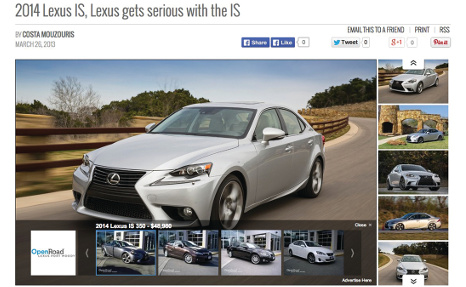
“We provide dynamic inventory display advertising that use really advanced technology to effectively match the right vehicle with the right buyer in the marketplace,” Cruickshank told Auto Remarketing Canada. “In working with a large number of auto review publishers, we are now serving what is an in image ad, with a few extra bells and whistles.”
These ads live in the bottom quarter of the primary vehicle image, or video, on a review page.
“If a consumer is reviewing a Porsche Cayenne S 2013, what they will see in that ad unit is all of the Porsche Cayenne S 2013 models from our dealer partners that suit that particular shopper’s geographic location,” Cruickshank explained.
Recently, the company created what it calls the Auto Audience Network, which uses the ability to serve ads dynamically and to assess the content on a specific Web page to deliver the exact vehicle to match the auto review that is being read by the user.
The company does this by using its Web-activity analysis and data tools to target an automotive intender and dynamically serve them the appropriate vehicle and vehicles from the specific dealers’ inventory in question, Cruickshank explained.
If Speed Shift Media determines an automotive buyer is looking for a 2012 BMW 3 Series coupe, he said, then it is able to determine their model preference and make sure the ads the shopper gets served are served with that specific piece of inventory.
“We call it perfect contextual targeting. Based on the vehicle being reviewed, the ad matches the make, model and year of the vehicle in order to display the right vehicles within that ad unit. So the results and activity on those ad units is extremely high,” said Cruickshank.
So when a shopper is reading a review and looking at that specific information, their immediate potential next step is to go and explore that existing vehicle which is at a dealership near them, said Cruickshank, making in-image inventory advertising a logical marketing step.
The Dealer Perks
As the company has begun working with more dealer groups and individual dealers across the U.S. and Canada, Cruickshank said the response from the Canadian market has been very positive.
But don’t just take his word for it: “We have been impressed by the stats so far, and we’re looking forward to seeing how AAN (Auto Audience Network) continues to deliver,” said Ben Lovie, director of marketing, OpenRoad Auto Group Canada.
Cruickshank broke down a few of the factors of dynamic in-image advertising that make it so appealing to dealers.
First, dealers are almost always looking for ways to drive new traffic to their website, and more specifically, ways to drive the traffic to the “right” part of their website.
“When you are running a display ad, if a user clicks on that ad, they need to arrive at the right place,” said Cruickshank.
The company’s in-image ads lead consumers to the specific vehicle description page of the vehicle they have clicked on within the ad.
“The experience that a user is having is far better than when they are clicking on a vehicle and going to a landing page, or the home page for that specific dealer. Where as in our instance, they are going exactly to the page they want to be on in order to submit a lead, request more information or communicate directly with that dealer,” Cruickshank said.
Dealers are also focused more now on driving traffic to their own websites, taking the emphasis of of third-party inventory listing sites.
Another perk to take into account regarding this type of advertising is that these ads are being placed in the most primarily viewed part of a website. According to webpage heat mapping, consumers are spending the most time on any page viewing the primary image and the title, which usually lives just below the primary image, Cruickshank said.
“So really these ads are in the most visible part of any given content page. Second, it is unexpected because it is seeing something within that primary image that is less common — which makes it more interesting,” he added.
The ad unit is also considered native advertising, another industry buzzword, in that It is part of the content customized to each individual site. It adds value for dealers, the company’s publishing partners, and most importantly — the user looking for a vehicle.
Speed Shift Media president and chief technology officer Steve Kump said, “Our auto dealer clients are seeing significant value when using in-image campaigns; when comparing results to standard display ads lifts of as much as 100 times in highly targeted clicks are not uncommon.”
One of the most amazing statistics, Cruickshank said, is the engagement click rate, meaning people who scroll through and look at multiple vehicles in each ad.
“The engagement click rate is typically 15 percent or better. That’s more than one in every 10 people actually engaging with the ad — this is completely unheard-of for online display advertising,” Cruickshank said.
Kump, of Speed Shift Media, added: “But more than driving new traffic to dealer sites with a high click through rate we are sending customers to the best possible landing page — the dealers vehicle detail page where they are spending more time and converting more often.”
Targeting Auto Shoppers
One of the most captivating elements to this type of in-image inventory advertising is its targeting capabilities.
Since the inventory ad is found directly over the bottom quarter of the related review, Cruickshank went so far as to call it “perfect contextual” advertising.
The other aspect is geographic targeting.
Cruickshank pointed out that the ads are not perfectly contextual unless the dealer is in the shopper’s geographic area, “so, of course, we enable targeting within specific geographic areas around that dealers location.”
Shoppers in Winnepeg, Manitoba, for instance, who pull up an ad unit or review will only see inventory in that location, and the vehicle in question won’t be farther away than the allotted number of miles away from the dealer’s location.
“Typically, it is set up to ensure that buying region or designated market area of that dealer is respected,” Cruickshank added.
Honing the VDP
In-image inventory advertising really puts the spotlight on dealers’ vehicle description pages, putting more emphasis on creating VDPs that are inviting to shoppers.
“We see a lot of VDP pages in what we do, and there are always varying degrees of effectiveness, in that in some cases, a VDP can look a bit like a three-ring circus. If there are too many things going on, users can get baffled,” said Cruickshank.
The key is simplicity. Two or three call-to-action choices on a VDP are enough, he said. For example, “complete this Web form,” and “call here for more information.”
In this case, a user is more likely to convert into a lead as opposed to just being confused or worse, irritated.
“One of the most important things in e-commerce environments is simplicity,” said Cruickshank. “Keeping things simple is the most effective way to get results.”
The well-known blue-and-white Hyundai dealership look will soon be a thing of the past. Hyundai Auto Canada Corp. announced this week that it has begun to adopt Hyundai’s new Global Dealership Space Identity initiative.
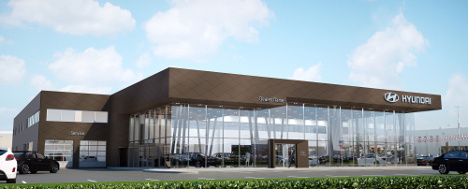
The redesign, which will start with all new dealerships being built worldwide and progressively update existing dealerships, starts with a major renovation of the exterior design. Replacing the traditional blue and white colors will be a more subtle bronze roof structure, though the signature Hyundai blue will remain an accent color internally.
Don Romano, the president and chief executive officer of Hyundai Auto Canada Corp., thinks the GDSI’s new color scheme will make Hyundai unique amongst its competitors.
“The automotive industry is filled with brands that adhere to primary colors such as blue or red, and it’s time for Hyundai dealerships to stand out among the competition the same way Hyundai vehicles stand out on the road,” Romano said.
“Rather than abandon our history with the blue color to pursue a new direction, that color will be found throughout the new dealership design in strategic, highly visible customer-centric areas. Instead, our goal for GDSI is to introduce a more modern, premium look to our dealerships that will elevate the perception Canadians have of our brand in the same way our fluidic sculpture vehicle deign elevated their perception of our products," he continued.
The interior dealership design will also receive an overhaul, featuring more modern furniture, customer lounges, digital kiosks, tablets and wheel stands, while incorporating indoor plants and unique flooring to create a natural-feeling environment indoors. The high-end Hyundai products, such as the Genesis and Equus, will have their own separate showrooms within the overall showroom.