Zanchin Automotive Group is looking for its customized app to be used by customers as much as those individuals might hit their smartphone button to access Amazon or Instagram.
Mobile Einstein, a provider of geo-mobile sales solutions for dealer groups, recently announced that it has partnered with Zanchin Automotive Group, one of the largest dealer groups in Toronto with more than 32 locations and 18 brands.
Officials highlighted the partnership is geared to enable the group to deliver an enhanced omni-channel experience via the Zanchin Automotive Group mobile app.
Mobile Einstein insisted that customers are becoming increasingly mobile and expect to interact with their dealerships of choice through new digital channels. This partnership is designed to provide Zanchin Automotive Group with a branded mobile app for its family of dealerships.
Customers and potential buyers can download the free dealer app to their smartphone, providing a personalized customer and shopper experience with personalized notifications, targeted geo-fencing, easy service scheduling, roadside assistance, live chat, inventory browsing, test drive scheduling, mobile offers, customer referral programs and digital loyalty rewards, to name a few.
“We pride ourselves on delivering an enhanced customer experience, and for years Zanchin has built confidence with our customers who purchase and service both new and pre-owned vehicles from us. The way customers interact with the dealership is changing, and we have to change with it and offer options,” said Andria Zanchin, principal and executive vice president at Zanchin Automotive Group.
“In today’s digital world where every shopper and customer has a smartphone, delivering engaging experiences through a personalized dealer mobile app is key to growing long term customer relationships,” Zanchin continued. “We are excited to partner with Mobile Einstein and take our customer acquisition and service retention to the next level.”
As dealers like the Zanchin Automotive Group look to focus on fixed operations as a principal source of profitability, Mobile Customer VIP by Mobile Einstein can help dealerships optimize service revenue and retention by connecting with customers via their smartphone with timely automated alerts and offers during opportune moments in their vehicle lifecycle, such as an oil change, tire rotation, brake service, maintenance checkup and more.
The growth in GPS technology is giving rise to a trend in localization for the automotive industry. Geo-Mobile Sales by Mobile Einstein can allows dealerships to set a virtual perimeter around their location as well as competitor lots. When customers and potential buyers pass through the perimeter, they trigger a timely and personalized notification to their smartphone, with an effective call-to-action to visit the dealership’s sales and service center.
Creative call-to-actions can foster visits and participation such as a digital scratch and win, a loyalty reward, a virtual tour, a digital coupon, or a pop-up sales event.
With Geo-Mobile Sales, the Mobile Einstein solution can alert the dealer’s sales and service staff when customers and prospects are visiting a competitors’ lot, and prompts them to initiate a timely and personalized follow up based on detailed analytics on the name of the buyer, the dealership they’re visiting and time of day.
With this critical insight, dealerships can boost local awareness among prospects looking to purchase a vehicle and retain customers looking to schedule a service appointment.
And now the Zanchin Automotive Group has these tools from Mobile Einstein.
“While dealerships will continue to play a significant role as primary channels for building personal contact and relationships with customers, they will need to adapt their sales and fixed operations’ infrastructure to a new generation of consumer preferences that necessitate a mix of physical and digital presence,” said Tony della Busa, president and chief executive officer of Mobile Einstein.
“Forward-thinking leaders like Zanchin Auto Group are enhancing their mobile strategy by engaging shoppers at every stage of their buying journey. This targeted form of mobile communications is helping their family of dealerships to gain the ultimate competitive advantage by engaging customers at every key moment in their vehicle ownership lifecycle,” della Busa went on to say.
More details about the company products are available via this video or by going to mobileinstein.com.
The Used Car Dealers Association of Ontario (UCDA) is orchestrating a new online effort to connect shoppers and dealerships within the province.
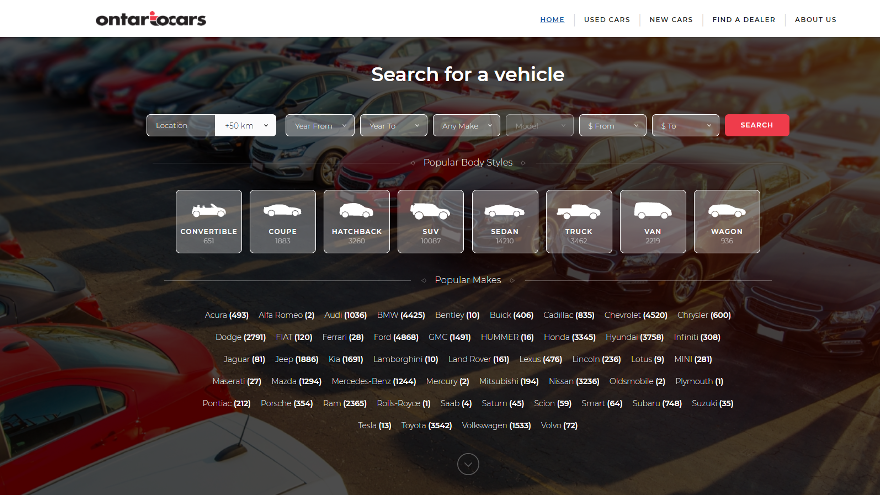
The newest solution for Ontario vehicle shoppers — Ontariocars.ca — powered by UCDA members is designed to assure consumers that all vehicles listed for sale on the site come with eight specific elements, including:
—All-in pricing: Meaning the price you see is the price you get.
—Full disclosure: Vehicles listed on Ontariocars.ca are sold with full disclosure of all the important details about the vehicle's history.
—No liens: By law, registered dealers must guarantee there are no outstanding loans on a vehicle they are selling, including all vehicles listed on Ontariocars.ca.
—No illegal sellers: Only licensed, registered dealers are permitted to list their vehicles on Ontariocars.ca, which means consumers will never be duped by illegal, unlicensed sellers.
—Compensation fund protection: A product 100 percent funded by the industry, the compensation fund will compensate consumers with a valid, proven complaint if the purchase is made through a registered dealer.
—No clutter, just cars: Ontariocars.ca is focused on vehicle listings without flashy advertisements distracting consumers from the task at hand.
—Advanced technology: Built with the latest technology, Ontariocars.ca is simple to use from your desktop or mobile device.
—Regulated sellers: All sellers are regulated by the Motor Vehicle Dealers Act and adhere to the UCDA Code of Ethics.
Based on the premise that approximately 2 million new and used vehicles are bought and sold in Ontario every year, UCDA is hopeful for what this online shopping option can do for member dealers as well as their customers.
“Ontariocars.ca was created to ensure consumers can shop for a vehicle, secure in the knowledge they will benefit from the protections afforded to them by legislation,” said Warren Barnard, executive director of the UCDA and the sponsor of Ontariocars.ca.
“Ontariocars.ca is the only online source that offers all these protections on every vehicle listed on the site.”
To promote the launch of Ontariocars.ca, a series of contests is open to residents of Ontario for a chance to win four driver-themed grand prizes, including an exotic car experience, an audio/speaker system, car mats, gas cards and more.
Consumers are invited to enter for their chance to win by following Ontariocars.ca on Facebook and Instagram.
This March, dealers across Canada are joining together in asking customers to take a pledge against driving distracted.
Distracted driving is a dangerous and growing trend that is responsible for 4 million vehicle collisions a year in North America, according to data from CAA cited in an LGM Financial Services news release.
The 2017 Auto Dealers Against Distracted Driving Campaign began March 1. Hundreds of dealerships have joined the campaign, now in its third year, and are seeking pledges from their customers, staff and communities.
Anyone wishing to take the pledge can do so here, or by posting it on Twitter or Facebook using the hashtag #TakeTheWheel.
Linda Leo of West Coast Kia in Pitt Meadows, British Columbia, is one of four featured dealers in this year's campaign.
“West Coast Kia has been an active participant in the Distracted Driving campaign since its inception and we look forward to engaging our customers again for a cause that hits close to home in our industry,” said Leo in a news release.
“From my experience, it doesn’t take a lot to make a connection,” she added. “A quick conversation or a little reminder combined with a bit of passion has the potential to make a real impact for the cause in a short amount of time.”
LGM Financial Services began the campaign in 2015 as a way for Canadian dealers to bring attention to a growing issue and educate consumers on solutions to avoid distracted driving.
“While we continue to see hundreds of dealers participate in the campaign year over year, our focus for 2017 is to provoke increased engagement between dealers and their customers through online pledges,” Marc-Andre Lefebvre, vice president of sales for Quebec and campaign lead at LGM, said in a news release.
The campaign is supported by Sovereign General Insurance Company, The Co-operators, Canadian AutoWorld, LoweMartin and Autosphere.ca. Additional information and materials for dealers can be found here.
As part of Auto Remarketing Canada's annual Power 200 this fall, we reached out to some of the top executives in the Canadian used-car business for an inside look at their businesses and their insight into the remarketing industry.
Next up in this series is a September Q&A with Alexi Venneri, chief executive officer of Digital Air Strike.
Auto Remarketing Canada: What are some ways dealers in Canada are changing — or perhaps should change — their social media strategy?
Alexi Venneri: More people are spending more time on social sites. That means it’s increasingly important for dealers to monitor and manage their social sites, posting regularly and responding to any comments and reviews. Facebook continues to be the most used site in Canada. Even though organic reach has dropped, dealers can create Facebook events, which don’t get filtered, that highlight their sales/service specials and their community events.
The biggest change we are seeing is the use of and results from social advertising on Facebook. Consumers are engaging with ads and the cost is much lower than all other forms of advertising. We are seeing leads turn to car sales on a daily basis.
As more people read social posts and view reviews on the sites as “trusted,” dealers need to have a plan in place to respond to all reviews, positive and negative. A business’s online reputation is insurance for every dollar spent on advertising especially with Google beginning once again to showcase reviews from other sites in search results.
ARC: Digital Air Strike is based in the US, but does work in Canada, too. What are some of the differences and similarities you have noticed about the car business in the two countries?
AV: The biggest similarity is that our dealers are seeing results and selling cars through social media. While the volume of consumers that a dealership can reach in Canada is lower, that only means each lead that social media does generate is that much more valuable.
From a reputation management standpoint, the main difference is the type of review sites and activity levels. In the U.S. Cars.com, Edmunds.com and Yelp are popular review sites. While there is Yelp in Canada, the other sites are not and we are seeing the main growth of reviews in Canada on Facebook and Google +.
However, the strategy is the same: monitor for comments/reviews, respond to positive and negative comments/reviews and take any dispute offline immediately.
We’ve noticed with our dealers in Canada that they do a great job building loyalty with customers returning three or four times to purchase a vehicle from the same dealer. Of course any dealership that delivers a great experience can create raving fans.
A great way to encourage return visits is by surveying that day’s customers nightly. Besides letting them know you appreciate their business, you will usually be alerted to problems before they turn into major issues. For the positive comments, have a plan to let your customers share that feedback on public review sites. Most businesses have more happy customers but angry ones are more vocal so having an automated survey program to give all customers a voice and an easy way to gather testimonials is crucial.
ARC: What are some social media features/options that dealers have at their disposal that they might not know about?
AV: Facebook events can be used to “advertise” your sales/service specials and community events to all of your followers and YouTube and Instagram are great places to get more people to see the commercials you produced for television. If dealers haven’t tried social advertising they should. They don’t need to spend more on overall marketing, just take a small portion from your PPC or display budget and use it on social ads — we’ve had the most success with Facebook. The targeting is impressive and the cost per click is much lower than Google PPC.
ARC: How can dealers strike a balance between social media advertising and social media engagement?
AV: Social media advertising IS engagement. That’s the great thing about advertising on social media. The targeting is so precise that your ads appear only in the feeds of people who are interested in or likely to be interested in your dealership.
Social Ads also create new opportunities for likers and followers to leave comments including questions about what you’re advertising. Dealers need to rethink what a lead is — it could be as simple as a comment on a post or ad, so have a plan in place to check for comments often. But dealers need to know how to respond and effectively target in order to see real engagement, leads and more sales. Working with a partner that specializes in this will yield great results.
Hyundai has a new way for customers to take their online shopping experience to a new level, and it’s using a tool many have likely used before.
Dealerships in Quebec and Alberta are offering customers a virtual tour of the showroom, service center and even the vehicles themselves by using Street View on Google Maps. The 360-degree Street View functionality with which many people are already familiar with has been brought indoors in part to explore Hyundai’s new Global Dealership Space Identity (GDSI) design that is rolling-out to facilities nationwide.
“We already know more and more customers are doing an increasing amount of their car shopping online; the data we see every day proves that,” said Lawrence Hamilton, director of marketing at Hyundai Auto Canada Corp. “Bringing that 360-degree Street View of Google Maps to two of our newest dealerships is a natural extension of what our customers are already looking for online and further accelerates the convergence of the online and bricks-and-mortar world.”
Hamilton said Hyundai Val-Bélair in Quebec and River City Hyundai in Alberta were selected for a pilot project as part of a larger, longer-term plan to ensure every dealership has a fully virtual presence that, ultimately, closely matches the physical environment.
The same team and equipment used to generate the Google Maps Street View online environment was used to capture the vast majority of areas within the two Hyundai dealerships that are accessible to the public. This includes three vehicles in each dealer’s showroom, with Hyundai Val-Bélair showcasing the Elantra compact car, Tucson compact SUV, and Genesis Coupe sports car and River City Hyundai showing off the Santa Fe XL 6-or 7-passenger SUV, Genesis luxury sedan, and Veloster 3-door.
“We decided to start this project with our newest GDSI dealerships as one of the motivating factors behind the new design for Hyundai facilities is to elevate the perception of our brand,” Hamilton said. “Extending those physical facilities into the virtual world will enable more people to experience the design and better understand what it means to be a Hyundai customer.
Volkswagen Canada kicked off December with a nationwide apology campaign, utilizing ads featured in over 100 newspapers across the country as well as a digital campaign to apologize to the Canada’s Volkswagen owners for the company’s damaged reputation following the diesel scandal uncovered earlier this year that is still not entirely fleshed out.
Thomas Tetzlaff, VW Canada’s manager of media relations, spoke with Auto Remarketing Canada to help clarify the situation, saying that the point of the message was not only to apologize to the Canadian VW ownership and fanbase, as well as VW dealers, but also to thank them.
“The campaign explains the impact of this situation on our proud legacy, values and trust in the Volkswagen brand,” Tetzlaff said. “We take great pride in the base of support we have built in Canada and felt we owed it to our employees, dealers and customers to publicly acknowledge the damage done to Volkswagen’s relationship with Canadians and to declare our full commitment to restoring faith in our brand. We hope that our customers will go to our microsite for additional information, and to register directly with us so as to facilitate further communication about this issue. By registering at the site, affected TDI owners will initiate the process to receive our appreciation package.”
Tetzlaff said that the package is not intended as “compensation,” but more as a sincere “thank you” for customers and dealers maintaining their patience while the company works on a remedy for the vehicles alongside regulators.
Similar to the deal offered in the United States, the VW Canada said the “thank you” package includes:
- A $500 pre-paid credit card for use anywhere credit cards are accepted
- A $500 dealer credit, which can be used at the Volkswagen dealer of their choice for service, parts, accessories or as payment towards a car purchase
- 3 years of complimentary roadside assistance (an added three years for customers that still have their “original” roadside package in place)
“Thus far, we have received positive feedback from our customers, many of whom have already registered on the site,” Tetzlaff said. “We are hoping to reach as many of our affected owners as possible, as this will improve the flow of information, and will expedite the repair process when it has been established.”
OMVIC announced today the beginning of its four-week campaign to spread awareness of all-in price advertising for car buyers in Ontario.
Terry O’Keefe, OMVIC’s director of communications and education, says there is a surprisingly low amount of awareness of the policy in the region.
“Only 29 percent of Ontarians know that if they see a dealer’s advertised price for a vehicle, that price must include all fees and charges the dealer intends to collect,” O’Keefe said. “This campaign is designed to further educate and inform, because better-educated consumers are better-protected consumers.”
As illustrated in the above video advertisement, OMVIC’s campaign message is “all-in pricing – it’s putting the fun and excitement back into buying a car … and, it’s the law!” OMVIC’s campaign includes online, radio and TV advertising across the entire province of Ontario, including all major television networks such as CBC, CityTV, CTV and Global.
O’Keefe, long an advocate for the policy, continues to explain the Ontarian policy as simply as possible.
“There should be no additional hidden fees or added surprise costs, with the exception of HST and licensing,” O’Keefe said.
For a complete explanation on Ontario’s all-in pricing protection legislation, check out OMVIC’s site here.
Technology in automotive dealerships has come a long way in the past decade, and now some stores equip their salespeople with tablets and have a dedicated e-commerce and marketing staff.
That said, many dealerships either don’t have the resources for the aforementioned initiatives, or are not sure where to start to create a digital strategy.
Madison Clement, digital media coordinator of Vancouver’s Trotman Auto Group and panelist at the recent Auto Remarketing Canada Conference, said although formulating a digital strategy may be overwhelming at times, there are four things all dealerships should make sure they have covered.
- A Mobile Site.
First of all, Clement says dealers must take a look at their mobile sites. Surprisingly, she said, in her experience there are still quite a few dealers who don’t realize how significant a responsive mobile site can be to their bottom line.
“A lot of dealers don’t even know or realize there is a difference between a desktop to a mobile site, and it’s pretty frightening sometimes what you see. So, a great first strategy would be having a strong used-friendly mobile site,” Clement said.
- Texting Options
Secondly, texting options are becoming more and more important right now, especially when attracting younger audiences to your website and dealership.
“Texting is massive right now. Millennials want to be spoken to on their level, and they want to be engaged in communication they are comfortable with,” said Clement. “And that’s how most of us communicate. Texting will work better than forcing them to make a phone call or fill out a form they might not be ready to fill out.”
- Social Media Strategy
Though some dealerships may not have the funds to dedicate an employee solely to social media strategy and implementation, Clement said it’s more about “knowing where to be.”
“Your strategy doesn’t even have to include paid social media, but rather it’s just knowing and understanding where you should be on social media and how to engage millennials properly,” Clement said. “This includes not yelling out your private sales and screaming about your used cars. There is a process that needs to be in place in order for them to feel safe and that they could engage with you, when they are ready.”
Social media is no longer something that dealer principles can see as a frivolous pastime.
“I think that’s an antiquated view, and we need to recognize and follow the traffic wherever it is,” said Clement.
And social media tends to be where millennials are these days, and Clement said it’s not just the younger generations — “everyone is using these platforms.”
“You have to be on it, and you have to be prepared somebody in your dealership in place to consistently run it because consistency is an issue,” said Clement. “You see someone posting every three months, or every three minutes, and it can throw off and detract from your following.”
Though Clement pointed out dealerships should definitely have a presence on Facebook, but the trend these days, especially with millennials, is leaning toward Twitter usage.
“If you are looking to engage that younger audience, twitter is massive and becoming bigger for that population,” Clement added.
And other network that may be a bit more under the radar when it comes to business usage is Instagram. The tool is no longer just for photos of major life events and pictures of your latest restaurant meal.
“I think you have to be on Instagram because we are seeing such a shift and seeing more male users on Instagram, as well,” said Clement. “You have the female viewership on something like Pinterest, but Instagram covers both sexes.”
Clement said starting off, if a dealership utilizes Facebook, Twitter and Instagram — as well as a Google+ account, of course — “you are pretty much covered.”
- Live Chat
Lastly, live chat options on websites are as crucial as they have ever been as shoppers look for instant gratification and convenience while searching for their next vehicle.
“That is when people are coming to your website and find some sort of chat medium, whether it be through a third party, or done in-house. Either way, you need to have it,” said Clement.
She noted that some dealerships are concerned their messaging might be misconstrued through third-party chat services, but Clement said the positives outweigh any potential negative.
“Live chat is a way to communicate that seems low-risk for the user, not threatening or pushy, and we are able to engage with them in a way they feel comfortable with and is a great medium to reach out to them and hear what they have to say,” said Clement. “It could be anything from your hours, or price questions.”
Though in reading these keys to success online these days, it may seem like marketing tactics have changed dramatically over the years.
This is true, but there are still a few strategies that ring true today that were also valid over a decade ago.
Although these days, it’s no longer about spending the most or having the biggest budget and more about running valuable content, Clement said there is one thing that still rings true today.
“You still have to have some type of value proposition, or unique selling proposition,” said Clement. “That is still important today, as much as it was 20 years ago, and I think that hasn’t changed a bit.”
What has changed are the mediums in which a dealership connects and engages with potential customers.
When it comes to selling cars today, social media plays a large role in consumer engagement, especially for the millennial generation, which tends to rely much more on referrals and suggestions from friends and family.
And it when it comes to meeting customer where they are, BMW and Ford stand out from the pack in Canada.
That’s according to a recent study from technology and data company Engagement Labs that ranked the top 10 Canadian automotive manufactures based on their social media performance on Facebook and Twitter over the past six months.
Using its eValue analytics data, Engagement Labs analysts found BMW Canada was tops for Facebook, while Ford Canada was No. 1 for Twitter performance.
Ford Canada also notched the No. 2 spot for Facebook performance, while Nissan Canada followed the Blue Oval on Twitter.
For Facebook performance, GMC Canada, Acura Canada and Chrysler Canada rounded out the top five, respectively. And for those sharing on Twitter, Kia Canada, Honda Canada and BMW Canada followed Ford and Nissan, respectively.
Engagement Lab asserted that social media strategies are now a crucial part of all OEMS marketing plans to “drive loyalty, brand affinity, and sales.”
Bryan Segal, chief executive officer of Engagement Labs, said, "Our analysis shows that automakers engage in conversations with their followers about new model launches, post images that would interest their followers and share industry news to drive brand equity.”
For example, BMW Canada, which ranked No. 1 on Facebook performance, utilizes a strategy that works to connect directly with Facebook users and expand the BMW “social community.”
Engagement Labs analysts pointed out a few points, in particular, that stand out about BMW Canada’s Facebook presence.
- They use hashtags regularly like the #BMWStories hashtag, which allows the user to lead the conversation.
- They have well-formatted pictures of cars in various settings that increase the product desirability.
- BMW posts reflect current events such as St. Patrick's Day and #TBT while still including their products within those posts.
For the automakers focusing on crafting messages in less than 140 characters, Ford Canada leads the pack.
Engagement Labs reported this is due in part because of unique hashtags the company utilizes, such as #FordChatCA, to inspire organic conversation. The company also regularly rewards users with giveaways, and the you can also find community event information on their Twitter page that feature the brand.
Mercedes-Benz, Toyota Gaining Social Steam
In terms of which OEMs are seeing the most growth in followers on social media channels, Mercedes-Benz Canada stands out for Facebook, while Toyota is tops for Twitter audience growth.
For Facebook, GMC Canada, Ford Canada, Nissan Canada and Mazda Canada completed the top five, respectively. Ford Canada was also No. 2 for Twitter growth, followed by Volkswagen Canada, Mitsubishi Motors and GM Canada.
Segal said, "This fan growth ranking proves that auto manufacturing companies in Canada continue to invest in the growth of their communities on these social platforms. It is interesting to see that many of the fastest growing fan bases may not necessarily be the top ranked eValue scoring leaders on Facebook and Twitter. The exception is Ford Canada, whose eValue score is high, and continues to drive growth on both channels."
Here are the full results from Engagement Lab's study on OEM social media performance:
Top automakers for social media performance on Facebook and Twitter over the past six months:
|
Ranking
|
Facebook
|
Twitter
|
|
1
|
BMW Canada
|
Ford Canada
|
|
2
|
Ford Canada
|
Nissan Canada
|
|
3
|
GMC Canada
|
Kia Canada
|
|
4
|
Acura Canada
|
Honda Canada
|
|
5
|
Chrysler Canada
|
BMW Canada
|
|
6
|
Volvo Canada
|
Chrysler Canada
|
|
7
|
Honda Canada
|
Volkswagen Canada
|
|
8
|
Toyota Canada
|
Subaru Canada
|
|
9
|
Subaru Canada
|
Mercedes-Benz Canada
|
|
10
|
Audi Canada
|
GM Canada
|
Automakers who have seen the most growth on Facebook and Twitter over the past six months:
| |
Facebook Fan Growth
|
Twitter Followers Growth
|
|
1
|
Mercedes-Benz Canada
|
Toyota Canada
|
|
2
|
GMC Canada
|
Ford Canada
|
|
3
|
Ford Canada
|
Volkswagen Canada
|
|
4
|
Nissan Canada
|
Mitsubishi Motors
|
|
5
|
Mazda Canada
|
GM Canada
|
|
6
|
Kia Canada
|
Honda Canada Inc.
|
|
7
|
Acura Canada
|
BMW Canada
|
|
8
|
Hyundai Canada
|
Audi Canada
|
|
9
|
Subaru Canada Inc.
|
Mercedes-Benz Canada
|
|
10
|
Chrysler Canada
|
Mazda Canada
|
By now, online advertising has permanently rooted itself in the Canadian automotive industry. It’s pretty much mandatory for legitimate dealers, as clean criminal records are for legitimate babysitters or judgmental tones are for dental hygienists.
And it’s not going anywhere. Over the past four years we have seen an explosion of growth in this format of advertising while traditional media channels are steadily losing traction.
So where should you focus your attention? If you break it all down, you’ll see that the great majority of this online growth can be traced back to three forms of online advertising: Paid search, sometimes referred to as Google AdWords or PPC; display advertising (think banners); and remarketing, where you subtly remind people about your dealership for many weeks following their latest visit to your site.
Beyond these three areas, growth has occurred, but not in the same explosive way. But new forms are emerging. If you feel that you’ve reached your ceiling with paid search, display, and remarketing campaigns, we can show you new roads to progress.
Here we’re going to tell you more about two newer formats of affordable online advertising that can give you a head start over your competitors.
But first, a disclaimer: If you’re just getting into a campaign, paid search and remarketing are absolutely fantastic places to start. Once you have mastered those, then you can move on to what we are going to talk about today.
Got that? Then let’s get started!
YouTube
We all know that Google is by far the number one most popular search engine. But what’s next in line?
It’s not Yahoo. And it’s not Bing.
It’s actually Google’s adopted little brother — YouTube.
The first thing I want you to do is start thinking of YouTube as a search engine, not a cat video database. YouTube is extremely popular in Canada, regularly used by over 91 percent of the online population.
Also, like the new Costco on the outskirts of town that no one seems to have discovered yet, YouTube’s marketing platform is extremely underused by Canadian auto dealers. From an advertising perspective, this is like having an eager stadium-sized crowd, and no band on the stage. Blast that snare drum and kick open the door.
So now we know a little about what makes YouTube exciting for Canadian auto dealers. But what are your options as an advertiser?
There are a number of ways that you can advertise on YouTube: it could be through a video (InStream); within the video listings, similar to search in general (InSearch); or next to the video while it’s playing (InDisplay). Of all the InStream ad placements, the most common are what we call “Pre-Roll” (the short clip that plays before the desired video). This is what we’ll be focusing on for this article.
Even with pre-roll advertising there are a few more choices for how you can proceed as an advertiser. You can pay to guarantee that the entire ad is watched, or you can work in a model with that little “Skip Ad” button that people love. If people do indeed choose to skip your ad, you don’t have to pay for that impression.
Let’s make sure that hit home — you don’t have to pay for an impression when someone skips your ad. This model is called “True View,” and a few dealers are taking great advantage of it.
In this instance, you still get a bit of your branding out to everyone, but you pay for only those viewers who want to see what you’re selling; if they were too impatient to get to their Bruno Mars video, chances are they were never going to buy a Hyundai Genesis from you in the first place. At least not today.
With the formats down, now let’s talk about targeting. With YouTube, you still get the same great ability to target potential consumers that you do with other formats of online advertising. You can target individuals based on where they are located, what they are interested in, and even their demographic.
Perhaps you want to target “men aged 18-34 in the GTA” or “women who enjoy travel.” Line up those crosshairs and convert.
OK, so now we know that we pay for only those viewers who are interested in our message, and that we can laser target different groups.
But what about the results?
Last November, Google released a study entitled “Digital Drives Auto Shopping.” Here are a few of the key findings from that study specific to online video:
- Online video research is on the rise among auto shoppers.
- The amount of time spent watching video is growing. Over half of auto shoppers now watch 30 minutes or more, and 1 in 4 watched an hour or more while researching.
- Online video was the top ad format for driving brand consideration.
Now those are all very encouraging statements, but two parts of the study really stood out above all else:
- Video advances brand discovery and consideration
- 57 percent agreed that watching videos online helped introduce them to new brands.
- 65 percent were able to narrow down their options after viewing.
- Shoppers are taking action after watching video
- 49 percent visited a dealer
- 37 percent searched dealer inventory
Can you say conquest and conversion! If these numbers don’t get you excited about YouTube, check your pulse.
I can appreciate that some of you might be thinking, “Hey Duncan, that sounds great, but producing a video is too hard or expensive.” Or maybe you don’t know where to start.
The first bit of excellent news it that video production is scalable, and there are a number of different price points available to dealers in Canada. If you’re looking for production assistance, get in touch with me and I can point you in the right direction. And here are a few quick pointers if you’re unsure where to start:
- Be concise and direct: You don’t have a lot of time to capture viewers’ attention before the urge to hit the “Skip Ad” button becomes all-consuming.
- Think conversion: Make sure that you tell the viewer what you want them to do immediately after watching your ad.
- Be at least somewhat current: Don’t post your TV commercial that you’ve been running ever since Canadian Idol was a thing. Freshen it up.
Want a few examples to better see what this looks like in execution? Fire me an email, and I would be happy to send you a few scalable video ads we’ve filmed this past month. I mean it. YouTube is a great place to launch your online advertising strategy to the next level.
There is a huge vacancy waiting to be filled by progressive dealers looking to get more leads from their campaigns. And if you’re paying for only the ads that people watch to the very end, while still getting five seconds of free branding for those that aren’t, what have you to lose? Hint: a golden opportunity.
Gmail Sponsored Promotions
Knew about YouTube advertising even before it was cool? Looking for the next thing? Check out Gmail Sponsored Promotions (GSP). Currently this is a beta product in Canada, and you might need some help accessing it. If so, reach out and we can hook you up.
So what is a Gmail sponsored promotion? Basically your ads appear directly in the Promotions section of someone’s Gmail inbox, neatly above the rest of their subscription newsletters and e-blasts. With GSP you can show your audience a simple subject line, some teasers and full-page ads above regular email, but not so much as to annoy recipients who didn’t log into their email to be bombarded with ads.
When they click on your promotion it opens like a normal piece of email, and they are presented with a full sized rich media advertisement to interact with. Pretty simple.
You also have the ability to focus your targeting in a number of different ways, whether it is through interest categories, demographics or keywords from the recipient’s inbox. You can even target people by the types of emails and newsletters that they may receive. Want to send someone who gets Car and Driver an ad about your new luxury convertible? Bippity-boppity-BMW 2 Series!
This is a very new product, but the results are bankable. From the campaigns we’ve tested so far, we’re seeing a cost per click under 75 cents and click-through rates over 3 percent. (That’s about 300 percent higher than a decent rate.)
Get in While the Getting’s Good
So to summarize, once you’ve set up your triple-threat offence of search, display and remarketing, there are still a number of other new ways to bulk up your online advertising presence; we touched upon only two today. If they seem daunting and out there, just try to remember how you felt back when you first heard someone utter “paid search” and “Google AdWords.” How did those work out for you?
You can still be very early to this party. Better book a babysitter.